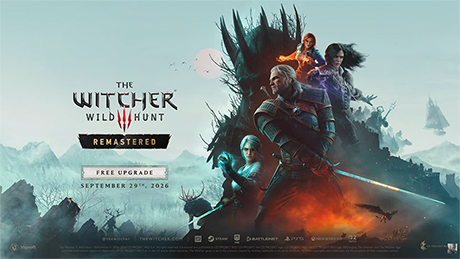
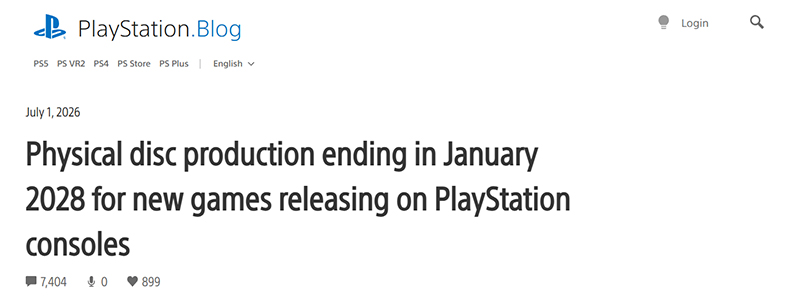
On July 1, 2026, Sony Interactive Entertainment announced that it will permanently discontinue physical game disc production for all new PlayStation titles starting in January 2028. According to the official PlayStation.Blog, all new titles released after this deadline will be distributed exclusively in digital formats. This decision marks a historic turning point for the console gaming industry, initiating a transition period for the future of retail media.
Why Sony is Phasing Out Physical Discs
Rather than a sudden policy shift, industry analysts view Sony’s move as a response to a decade-long trajectory in consumer behavior. In the official announcement, Sony framed the transition as a “natural direction” to align with current market dynamics.
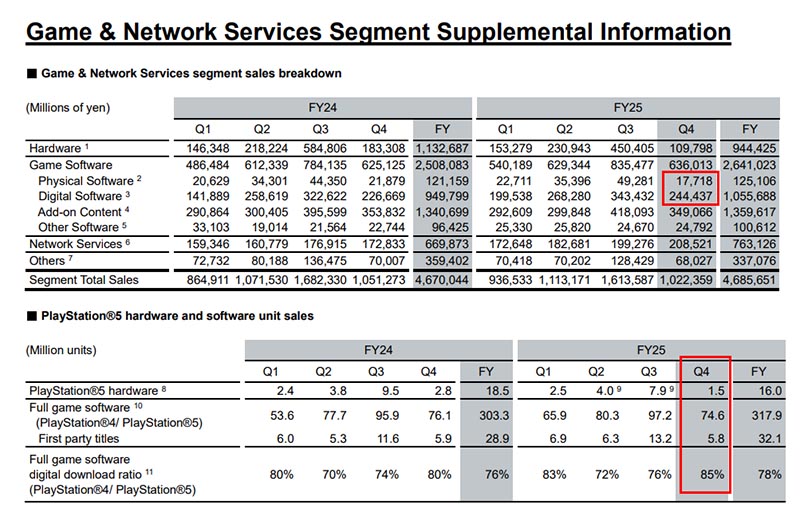
According to data from Ampere Analysis, digital downloads already account for approximately 80% of full-game software transactions on PlayStation platforms, leaving physical sales with a shrinking share of total revenue. Financially, eliminating physical distribution removes significant friction from the supply chain, reducing manufacturing, packaging, and shipping overhead—a reality starkly reflected in Sony’s latest quarterly financial data below.
This momentum has been further highlighted by major industry publishers. Recently, Rockstar Games confirmed that all editions of the highly anticipated Grand Theft Auto VI will ship exclusively with digital download codes, even within boxed retail editions.
When high-profile releases choose to bypass physical discs to reach consumers, platform holders like Sony see a clear baseline to establish a definitive timeline for the transition. If I remember correctly, this is exactly how PC gaming made its transition years ago—when physical retail boxes suddenly became nothing more than a cardboard container for a digital download code.
The Digital Supporter’s View (A Rare Minority)
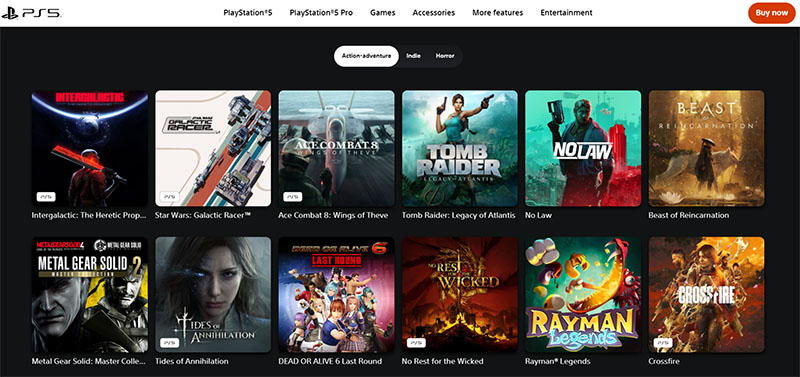
Proponents of the transition highlight the logistical advantages that a digital-first ecosystem provides. Digital distribution removes geographical barriers and physical storage clutter. For many players, the primary benefit is immediate accessibility—the ability to pre-load a 100GB title days in advance and play it the exact second it launches at midnight without waiting for shipping or retail lines.
Furthermore, supporters emphasize that a digital shift does not entirely eliminate the ability to share software. Platforms have developed digital sharing mechanics over the years. Similar to Steam’s long-standing ecosystem, PlayStation allows users to share their digital library with friends or family members via features like “Console Sharing and Offline Play,” providing a modern, platform-level alternative to handing over a physical disc.
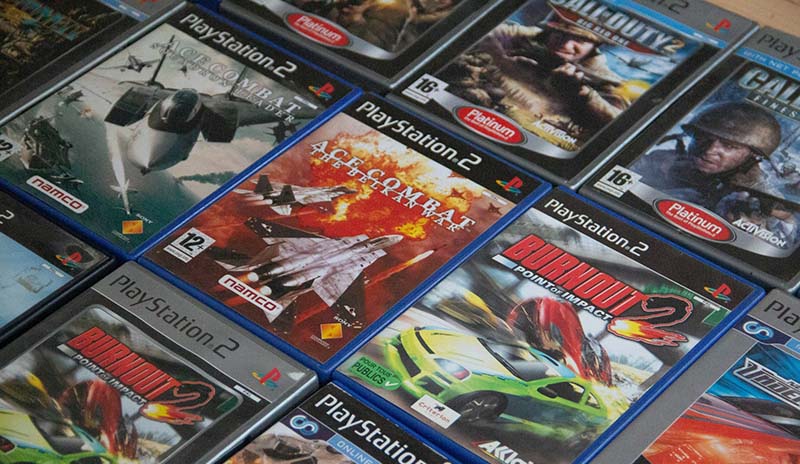
Photo by Denise Jans via Unsplash.
The Physical Supporter’s View (The Overwhelming Majority)
Conversely, critics and consumer advocates express profound concern over consumer autonomy and the elimination of traditional market mechanics. Discs have historically allowed budget-conscious players to trade in completed titles or purchase discounted pre-owned copies, a secondary market that disappears in a purely digital environment.
The primary anxiety, however, centers on long-term preservation versus digital licensing. Buying a digital game grants a temporary license rather than absolute ownership. Critics frequently point to recent licensing disputes—where legally purchased digital movies and TV shows were removed from user libraries due to expiring corporate contracts—as a warning sign of an all-digital future.
Without physical media, gaming history becomes dependent on active servers and platform policies. Additionally, without brick-and-mortar retailers competing for sales, a single, proprietary digital storefront will hold a monopoly on software pricing.
Photo by Benedict Calano via Unsplash.
A Shifting Industry Landscape
While the resistance from core collectors and traditional players is clear, there is a growing reality that a digital-focused ecosystem is simply becoming the standard model. Other media sectors, including music and film, have already transitioned almost entirely to streaming and digital formats, and PC gaming successfully crossed this bridge over a decade ago.
Although many long-time players find it difficult to accept the phasing out of a tangible collection, the data suggests that mass-market habits and corporate infrastructures are gradually moving in this direction. While the emotional attachment to physical boxes remains a powerful element of gaming culture, the industry appears to be steadily navigating toward a digital-centric future.
Then again, history has a strange way of repeating itself. Who knows? Much like how vinyl records staged a massive, unpredictable comeback decades after streaming supposedly killed physical music, we might eventually see a nostalgic renaissance for physical games down the road. Future trends are never entirely set in stone.
About the Author