Video Note: This video focuses on the main storyline and key side quests. To ensure a smooth viewing experience, I’ve edited out the repetitive travel and non-essential filler tasks.
It’s been a long wait! Today, I’m bringing you a deep dive into the official release of Cheap Car Repair.
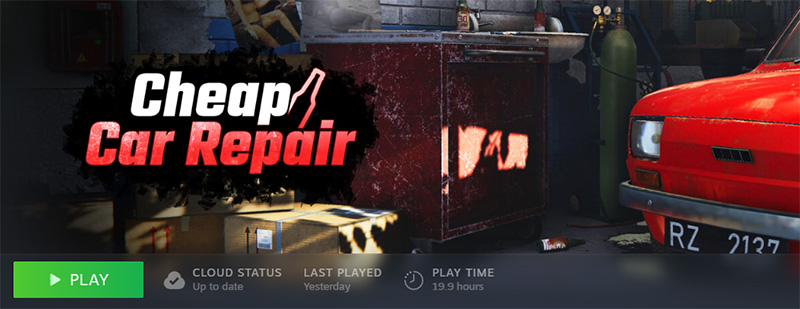
I previously covered the DEMO version, but with the full game out for a few days now, I’ve already clocked nearly 20 hours of playtime. While the DEMO impressed me with just three repair tasks, the full version maintains that high standard of quality. The repair system is incredibly detailed, featuring 8 different vehicle types and a massive library of parts and cosmetics.
Beyond just buying parts from the shop, you can scavenge for components in buildings throughout the semi-open world town, which is a lifesaver for players tight on cash in the early game.
Used under fair use for commentary, criticism, and educational purposes.
What’s Changed Since the DEMO?
- Better Optimization: The graphics have seen an upgrade, and the overall performance feels much smoother.
- Expanded Language Support: More players can now enjoy the game in their native tongue.
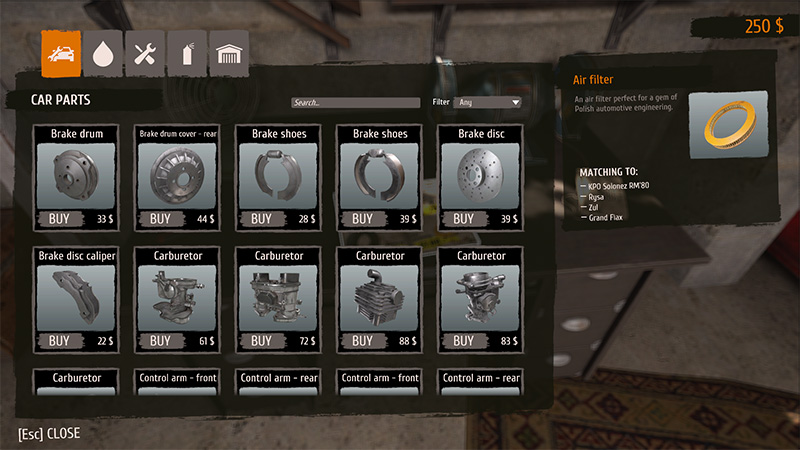
- A Massive Shop Overhaul: The variety of repairable vehicles, tools, and parts has grown significantly. While I didn’t count every single item, the sheer volume of parts available far exceeds what we saw in the DEMO, offering much more depth to the core gameplay.
Story and Quests
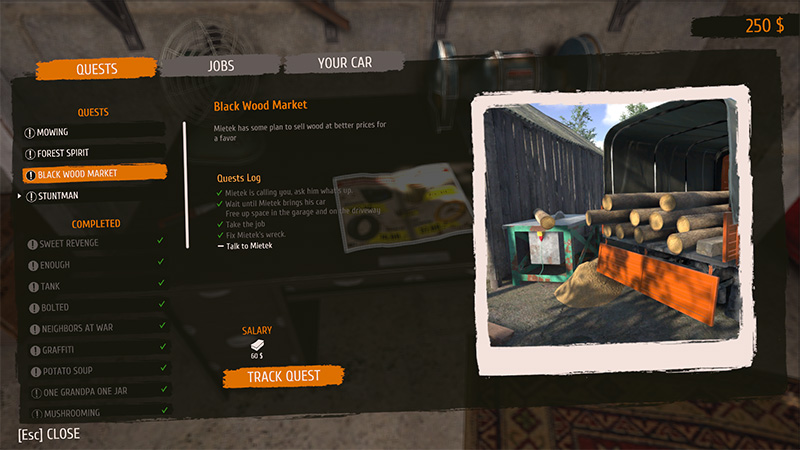
The full version features two distinct quest lines:
- Main Story: Revolves around the player facing off against shady forces (I’ll keep this spoiler-free).
- Side Quests: These focus on earning money, interacting with NPCs, and world exploration.
Fair warning: some side quests are quite challenging, especially the scavenger hunt types. If you don’t know exactly where an item is hidden, you might spend a significant amount of time wandering around. Regardless of the type, almost every mission involves some level of car repair.
Exploration and Navigation
The game is set in a small town. While the map isn’t massive by modern standards, it feels huge if you’re traveling on foot.
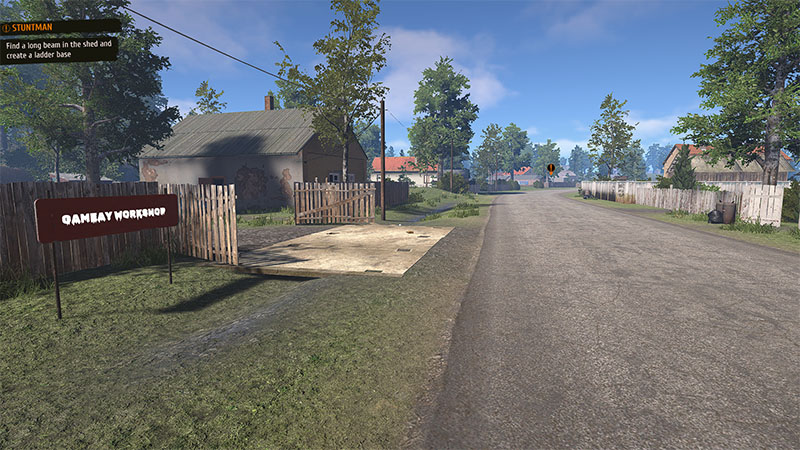
During my first two hours of play, I kept wishing there was a map feature that showed my location, where I left my ride, and a full layout of the town. Because I wasn’t familiar with the terrain early on, it was incredibly easy to get lost. I even frequently lost track of where I parked my bike since I was always hopping over walls to look for stuff. While things improved once I got my bearings, the lack of a map can make the early game a bit tough for newcomers.
Additionally, quest markers for specific items occasionally disappear. New players might not know where to look for these mission items and end up just wandering around blindly, which makes the experience feel a bit discouraging.
The game has a distinct “post-apocalyptic scavenger” vibe. You’ll find car parts of varying quality scattered everywhere, which you can either use for your builds or sell for a profit.
Making Money: A Survival Guide
While missions and repairs are your bread and butter, cash is very tight early on. Here’s how I managed:
- Sell Wood: Once you unlock the relevant NPC through the main story, you can “borrow” timber from the hill behind your house. This is a very reliable early-game income stream.
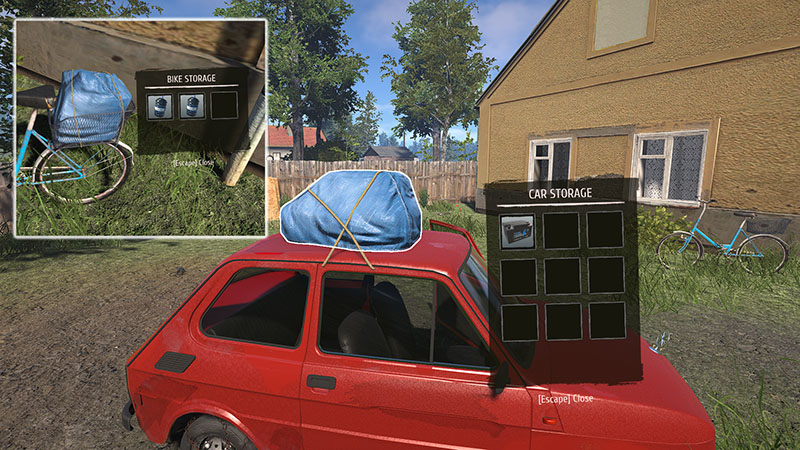
- Scavenge Parts: After unlocking the NPC at the bus station, you can sell found parts. This is lucrative, but since you start with only a bicycle and a 3-slot backpack, it’s slow going. However, individual parts often sell for much more than wood, making this a great late-game strategy.
- Prioritize Your Ride: Don’t waste money on fluff. Your first priority should be assembling your own car. A vehicle gives you 9 storage slots, which exponentially increases your efficiency for both travel and hauling goods.
Tips: Be careful with errand quests from NPCs. While they add flavor, they are often time-consuming and low-paying. I initially tried to do everything to earn money for parts, but I hit a wall. Once I switched to focusing on the main story and selling parts, the game’s rhythm felt much better.
Note: While the repair work itself offers good profit margins, players are held back early on by the dilemma of expensive parts and hard-to-find components. Because it’s difficult to establish a smooth, self-sustaining loop, I wouldn’t recommend relying on repairs as your primary starting income.
The Repair System
This is the heart of the game. The mechanical structures are highly detailed and broken down into individual components, which is a dream come true for gearheads.
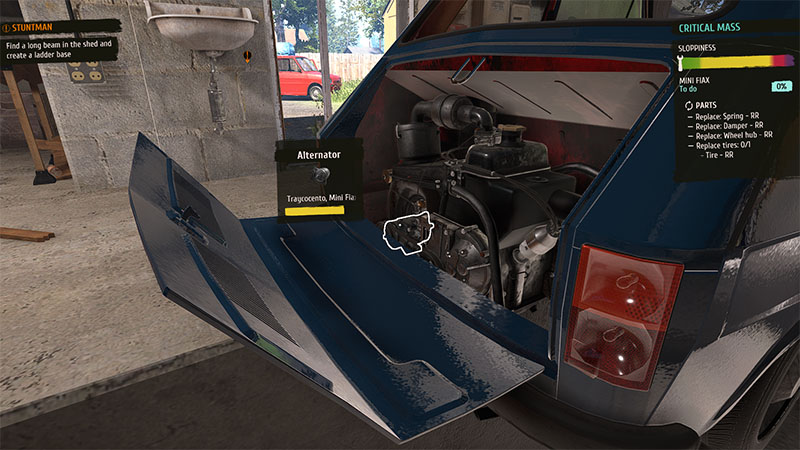
You’ll work on 8 different vehicle types, including sedans, trucks, tractors, and vans. Each has a unique layout, which keeps the experience fresh. The process is a full simulation, covering washing, applying putty to dents, sanding, painting, polishing, assembly/disassembly, and even topping off fluids.
Tools are also vital. While there aren’t dozens of them, the difference in efficiency between a basic and an upgraded tool is massive.
A Minor Flaw in Game Logic
While the game strives for realism, there are some inconsistencies in how it handles completion. For example, in a main quest involving a potato harvester, I could drive the vehicle and finish the task even though I hadn’t tightened the bolts on the equipment. Yet, in another quest involving a hood ornament, the game wouldn’t let me progress because a single screw wasn’t tightened.
Having a more consistent logic check for repairs would be a nice improvement, though these are minor gripes that don’t ruin the fun.
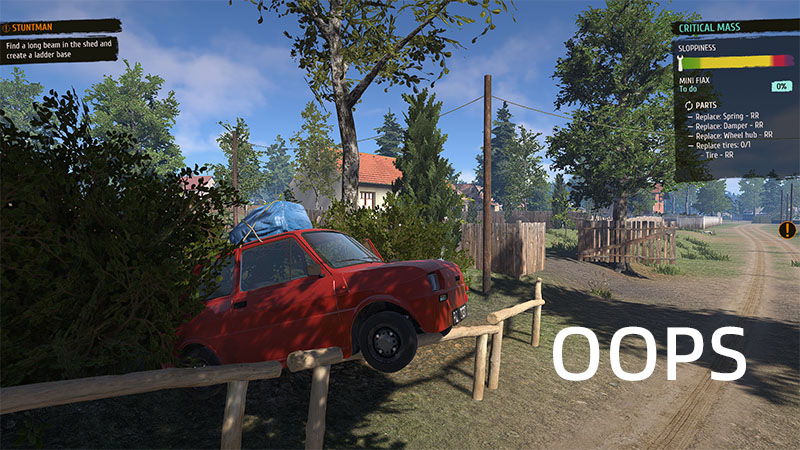
While setting up a screenshot for this article, I accidentally managed to wedge my car exactly like this. It’s the first time it’s happened to me, and I realized the game doesn’t really have a way to get unstuck other than reloading a save.
Even though getting completely high-centered like this is rare, when it does happen, it completely bricks the vehicle and kills your momentum. I’d love to suggest adding some sort of emergency feature—like a ‘Reset Vehicle Position’ or ‘Call a Tow Truck’ option. It would go a long way in making these rare mishaps a lot less frustrating.
Final Thoughts
After 20 hours, the best way I can describe Cheap Car Repair is that it feels like a real mechanic’s apprenticeship. You start off clumsy, confused, and overwhelmed, but eventually, you find your flow.
It’s not a perfect game, but it is a sincere one. If you love machinery and the satisfaction of bringing a rusted heap back to life, give this one a shot. You might just find your own rhythm in this little town.
About the Author