Video sourced from the GAMEAY YouTube channel. © 2026 VP Games.
I’ve been on a side-scroller kick lately, particularly when it comes to games with beautiful hand-drawn art styles. Having grown up playing these kinds of games, I’ve always had a natural affinity for them—even if the older console titles didn’t have the flashy graphics we see today.
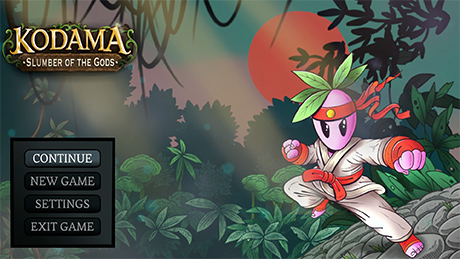
That preference is what led me to Kodama: Slumber of the Gods, an action game rooted in Japanese folklore. It also introduced me to VP Games, a developer doing some really impressive work. Looking through their other titles, their games look just as well-made, though I’ll save a deeper discussion on those for another time.
Kodama is currently only available as a demo, with no official Steam release date announced yet. Still, even this brief hands-on preview left a strong impression—most notably with its fluid controls.
Used under fair use for commentary, criticism, and educational purposes.
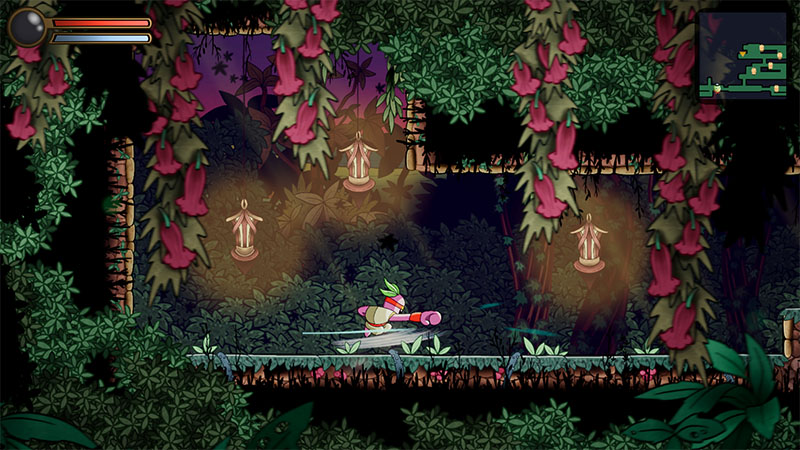
For an action game, the controls are remarkably snappy with virtually no input lag. Combat and platforming feel seamless, creating a smooth foundation that makes the gameplay immediately enjoyable.
This level of responsiveness shines brightest during high-stakes platforming sequences. In one segment, you have to dash past rotating blades, jump over collapsing floors, and grab onto bamboo stalks to slide to safety—all in one fluid sequence. Because the inputs are so tight, you can focus purely on your timing rather than fighting the controls.
Beyond the solid mechanical foundation, the game’s world-building is deeply rooted in Japanese folklore and urban legends. Your main goal is to reawaken and collect spirits or shrines as you explore, absorbing their power along the way.
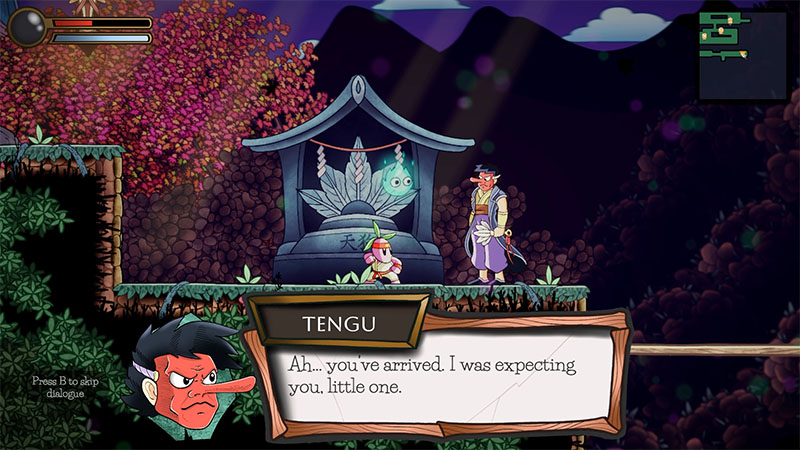
The protagonist is an adorable radish that transforms into a determined karate-fighting humanoid. Watching a plain radish turn into a warrior at the beginning faintly reminded me of Wukong’s origins in Black Myth: Wukong. While the setups are completely different, the underlying theme of transformation feels surprisingly similar.
Though primarily an action game, Kodama incorporates RPG elements, requiring you to unlock abilities as you progress—such as a down-thrust attack, dashing through enemies or hazards, double-jumping, and mid-air dashing.
Different forms also grant distinct abilities: the Ninja form allows you to dash, while performing a “Taiko Punch” by striking taiko drums enables consecutive aerial jumps.
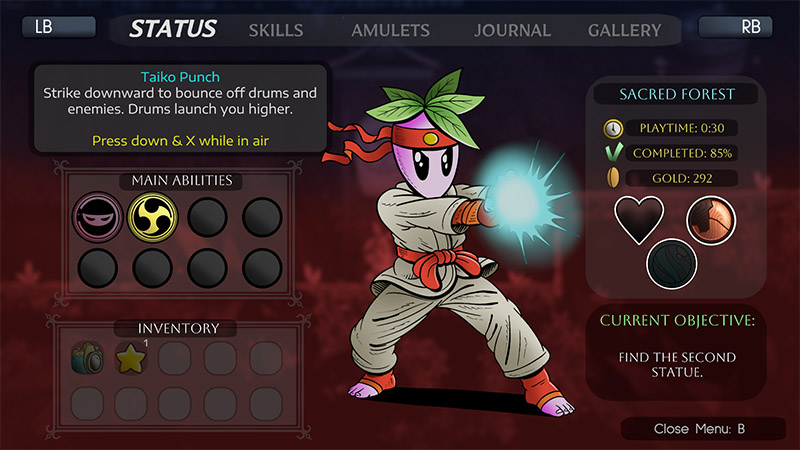
There is a separate skill menu that remained locked throughout the demo, so I can’t speak to its specifics just yet. I assume it functions differently from the form-specific abilities, but we’ll have to wait for the full release to find out.
Beyond that, the menus feature a collectible items tab, where found items grant passive buffs—a nice addition to character progression. There is also a bestiary providing background lore on NPCs and enemies, as well as a gallery section with concept art and line sketches that can be collected during gameplay, offering a nice touch for completionists.
As a single-level preview, the demo hits a comfortable, moderate challenge that’s easy to pick up. My guess is that the full game will get progressively harder as more levels are added.
The level boss is a giant tree with fairly telegraphed attack patterns.
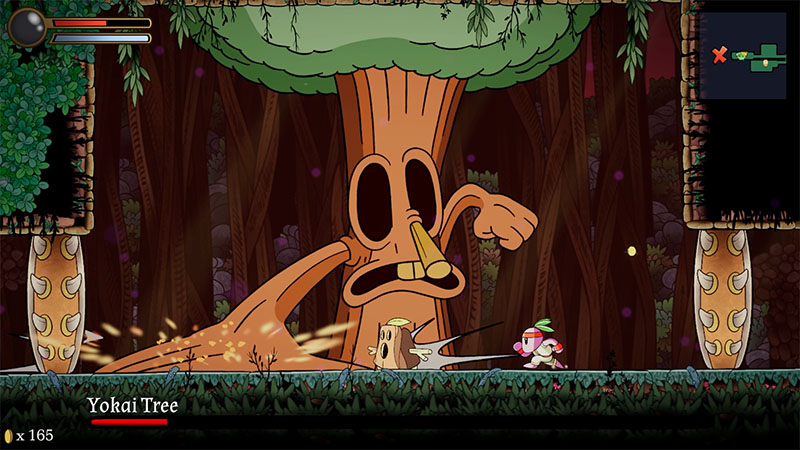
Since it’s an early encounter, the boss itself isn’t overly challenging—its attack frequency simply speeds up as its health drops, requiring you to adjust your timing.
The main difficulty comes from the minion mobs spawned during the fight, which can easily disrupt your dodge timing and lead to quick deaths if you lose your rhythm.
The level design includes some welcome quality-of-life features, such as save points and health shrines, meaning you don’t have to backtrack far after dying. Adding a fast-travel feature in the final release would make returning to earlier areas even smoother.
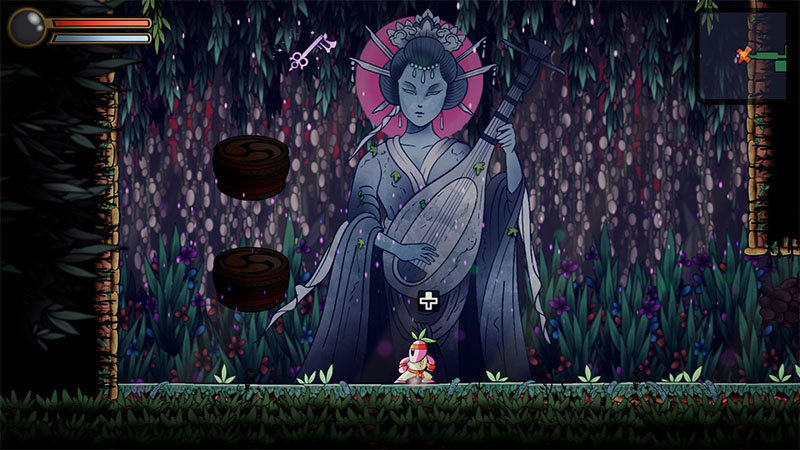
Alongside the responsive controls, the hand-drawn visual style is another major highlight—it’s simply beautiful to look at. The shrines, statues, and mythological figures are rendered with incredible detail, and the parallax scrolling in the background adds a great sense of depth and atmosphere.
As someone who’s played dozens of side-scrollers over the years, I genuinely think Kodama is worth keeping an eye on—you can already add it to your Steam wishlist.
Note: This article is based on the demo version, and features or balance may change in the full release.
About the Author