A new gameplay trailer for Black Myth: Zhong Kui has dropped, giving us our first look at the playable protagonist and other key figures.
Since official details remain scarce, I’ve put together a breakdown of the character backgrounds paired with my analysis of the trailer—looking at identity theories, move-sets, and core mechanics to help paint a clearer picture.
Zhongkui
In Chinese folklore, Zhongkui is not a historical figure, but an exorcist deity developed across centuries of popular belief.
Legend describes him as a brilliant scholar with a grotesque appearance. Driven to take his own life by an explosive mix of grief and injustice, he ascended to godhood. In Chinese folk tradition, fierce-tempered scholars who die wrongly are often venerated as protective spirits—and Zhong Kui stands as the most famous among them, charged with slaying the world’s malicious ghosts.
Later novels and traditional operas expanded his lore, establishing the foundation that Black Myth: Zhong Kui now adapts.
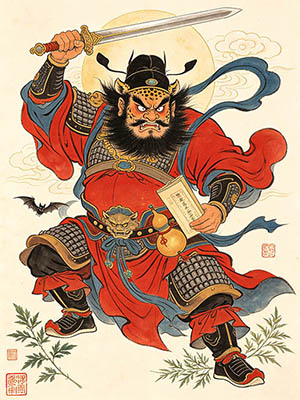
Not official game content.
Zhong Kui’s tale has endured for over a millennium. His image is traditionally hung on front doors to ward off evil, casting him in the public eye as a quintessential guardian deity.
Looking at the trailer, the summonable black-robed figure may very well be Zhong Kui himself, joining the player to take down bosses. In Chinese mythology, deities frequently intervene in human affairs through earthly avatars; this black-robed spirit likely serves that exact purpose.
The protagonist can apparently merge with this spirit to take direct control of him, boosting combat power significantly—a design that mirrors the transformation or summoning skills seen in Black Myth: Wukong.
Meanwhile, the floating talismans (Fu) scattered throughout the footage—traditionally used in Taoism to seal away evil spirits—seem to function here as tactical crowd-control mechanics, acting as fragments of his power.
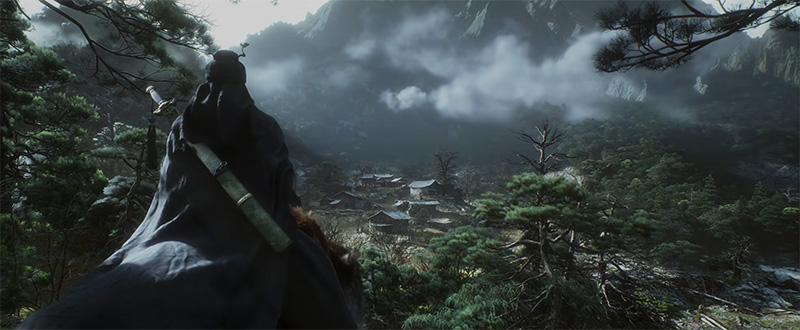
Used for editorial and informational purposes only.
Early in the game, Zhong Kui’s full, divine form cannot directly manifest in the mortal realm. Instead, he must funnel his power through talismans, spirit avatars, or the playable mortal host.
While Chinese folklore does support the idea of deities manifesting their power through earthly mediums, traditional Zhong Kui lore contains no such restriction. This concept is neither officially confirmed by the developers nor rooted in classic mythology.
My personal guess is that the game might feature multiple narrative threads.
Purely as my own guess, the game might feature multiple narrative threads. Building on that, we could even see a multi-character format similar to Resident Evil—telling parallel stories from different perspectives that ultimately piece together the overarching plot. With official details still sparse, however, this remains strictly speculative.
Du Ping
Du Ping originated in Yuan and Ming dynasty operas as a mortal scholar and a devoted friend to Zhong Kui during his mortal life.
When Zhong Kui died, Du Ping was the only person with the courage and kindness to arrange a proper burial. After ascending to godhood, Zhong Kui repaid this loyalty by giving his younger sister to Du Ping in marriage.
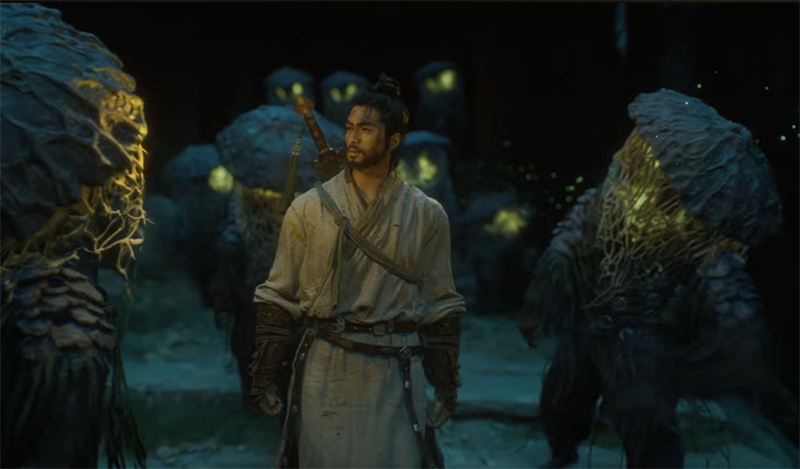
Turning back to the trailer, the opening scene introduces a white-robed man carrying a sword on his back, his hair styled in a topknot—the classic attire of a Taoist disciple. Could this playable character be Du Ping?
It is worth noting that in traditional opera, Du Ping is a conventional scholar with no martial or magical abilities.
Even if the game reimagines him as a combatant, the developers have not confirmed his identity. Distinguishing between artistic adaptation and classic opera lore remains essential here.
Zhong Mei’er
Zhong Mei’er is a name assigned to Zhong Kui’s sister by later writers; it does not appear in early opera texts.
Oldest legends made no mention of a sister, and Song dynasty paintings depicted her merely as an anonymous woman. It was not until Yuan and Ming operas that she was formally introduced as his sister and wed to Du Ping. In traditional folklore, she possesses no supernatural powers.
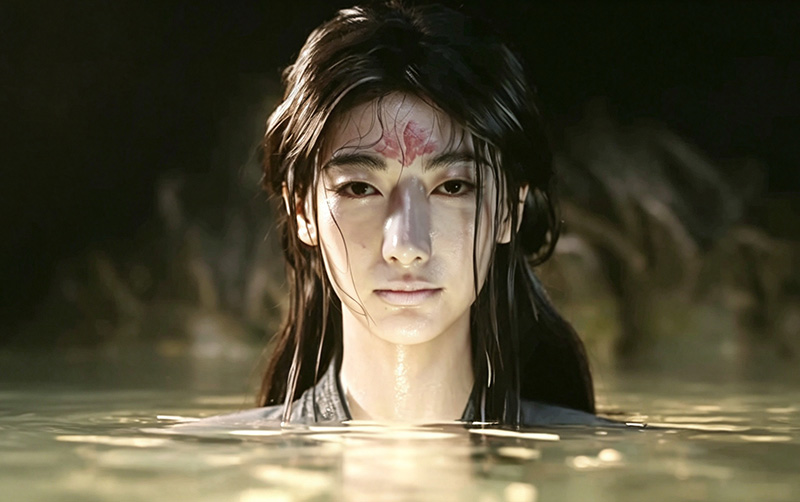
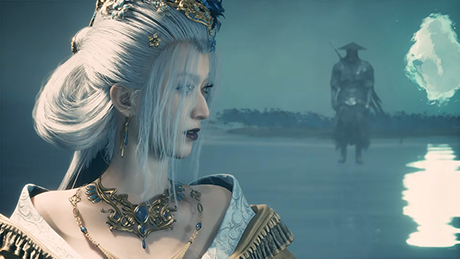
In the trailer, the white-robed protagonist follows guided talismans to the bottom of a lake, where he discovers a trapped woman. She may represent Zhong Mei’er—the protagonist’s wife in this context.
She is held captive by a clam-like monstrosity, and the protagonist’s effort to rescue her triggers the primary boss battle featured in the showcase.
Beyond these figures, the trailer hints at several unidentifiable characters whose connections to known myths remain unclear. Unraveling their true roles will likely depend on future official reveals.
Combat & Gameplay Mechanics
While these unconfirmed character identities fuel plenty of speculation, the trailer’s core value lies in revealing the actual combat loop—the key to understanding how these figures function within the game world.
The gameplay showcase delivers an uncommonly grounded feel.
Rather than relying on hyper-curated, hitless sequences, the footage reflects the reality of everyday play: the character takes damage, gets caught off guard, suffers knockdowns from mis-timed dodges, and relies on active healing windows. This unpolished presentation gives the combat an immediate sense of weight and credibility.
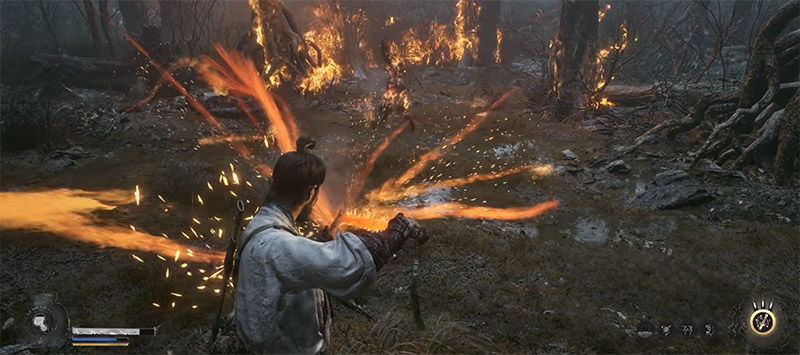
At a mechanical level, the combat features distinct tactical layers:
- Evasion System: Evasion goes beyond a simple roll. The move-set incorporates side-steps, ground rolls for wide-area clearance, and stylized backflips, providing flexible answers to varying attack rhythms.
- Offensive Options: The combat weaves together swordplay, physical kicks, and area-of-effect spells. A standout feature is the “soul-absorption” mechanic: after harvesting an enemy’s soul, the weapon infuses with lightning or fire, delivering sharp visual and kinetic feedback.
- Summoning & Crowd Control: The black-robed spirit serves as both a narrative anchor and a primary combat resource. Players can summon him to draw enemy aggro or possess him for sudden burst strikes. Meanwhile, talismans act as crowd-control tools to bind foes or significantly reduce their movement speed, creating windows for extended combos (though it remains unclear whether talismans are player-activated skills or purely scripted narrative elements).
- Recovery Mechanics: Healing relies on a traditional gourd-based healing system, similar to Black Myth: Wukong. However, the specific contents of the gourd and any unique mechanics tied to it have yet to be detailed.
If you are interested in the game and its mythological backdrop, exploring traditional folk legends and classic Chinese opera offers a great head start. Familiarizing yourself with these cultural roots adds a much richer layer of context when you finally step into the game.
Note: All character analyses presented here reflect personal interpretations grounded in Chinese opera and folklore, not official confirmations. Aside from the title “Zhong Kui,” no character names have been officially finalized, leaving multiple possibilities open—including the chance that the white-robed figure is another avatar of Zhong Kui himself.
About the Author