Video sourced from the GAMEAY YouTube channel. © 2026 iWorlds.
Dark Trip, developed by iWorlds, is a horror escape-room game with a strong dark aesthetic and high-impact visual concept art. Supporting both VR and standard screen modes, the game is now available on Steam for playtest requests, with a planned release date of October 30, 2026.
This review is based on hands-on experience with the standard (non-VR) mode.
At a Glance
- In a nutshell: An atmospheric title that seamlessly blends surreal dark art with VR spatial puzzle-solving.
- Key highlights: Striking dark visuals, cleverly designed VR interactive mechanics, and a deeply oppressive, immersive atmosphere.
- Best for: Fans of dark gothic aesthetics, VR puzzle gamers, and players looking for high-immersion atmospheric experiences.
Core Gameplay
In Dark Trip, you play as a detective sent to investigate an eerie, mysterious manor to find clues regarding a client’s missing daughter. To solve puzzles, uncover the truth, and escape these surreal rooms, you must use a mix of sinister entities, mechanical contraptions, and drug-induced hallucinations.
Used under fair use for commentary, criticism, and educational purposes.
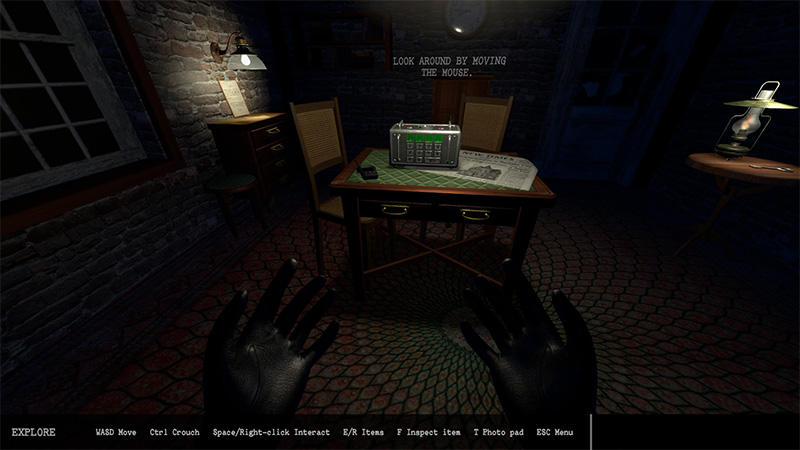
The game follows a “single-scene puzzle + connecting doors” structure. Some rooms feature two distinct escape routes: first, a conventional path where you gather items to unlock the door; second, a drug-induced hallucinatory state where you seek out specific items to exit the area. If you aim for a 100% completion run, you have to consume the drug to experience both modes, as key story clues are scattered across both visual states.
It’s worth noting that drug resources are limited. While you can progress through the game entirely in the normal view without using drugs, you will miss out on part of the storyline. I haven’t found a way to replenish the drugs yet. However, given that the playtest build is relatively short, resource management might simply be part of the puzzle design itself, though we’ll have to wait for the full release to verify this.
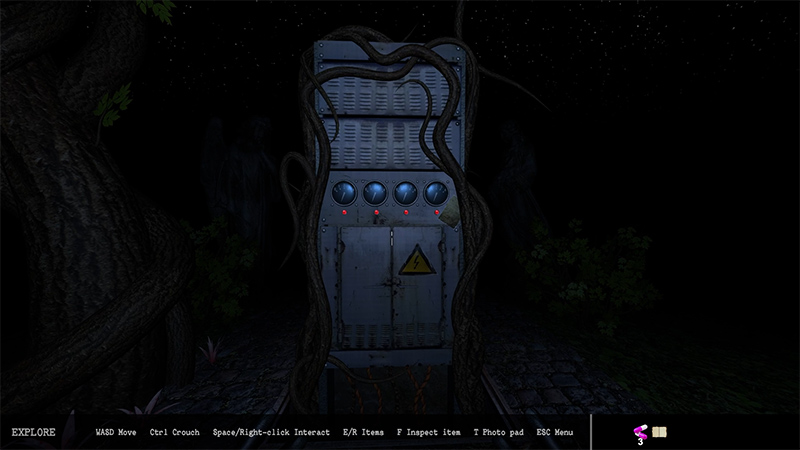
Take the entrance hall, for example: in the real world, you need to restore power at the electrical panel to open the main door. In the hallucinatory world, however, that same electrical panel transforms into a headless metal statue. You have to rotate the mechanism and adjust triangular mirrors on the statue to reflect light onto the door to open it.
These two states aren’t completely disconnected. If you’ve already turned the power on in reality, you won’t need to do the light reflection puzzle in the hallucination world because the door is technically already open. This dual-layer design lets you see drastically different objects and figures in the same environment, bringing out the game’s unsettling atmosphere to great effect.
To me, this “hallucination” feels more like a parallel world. It isn’t just a simple illusion, but a projection of the same physical space across different spatiotemporal states, giving you a sensation akin to time travel.
Visuals & Art Style
Dark Trip boasts refined, detailed visuals with a distinct dark gothic style that leaves a lasting impression. The game uses dim lighting throughout to build a sinister mood, while the paintings inside the environments are bold and avant-garde, blending dark gothic imagery with erotic metaphors to tell its story.
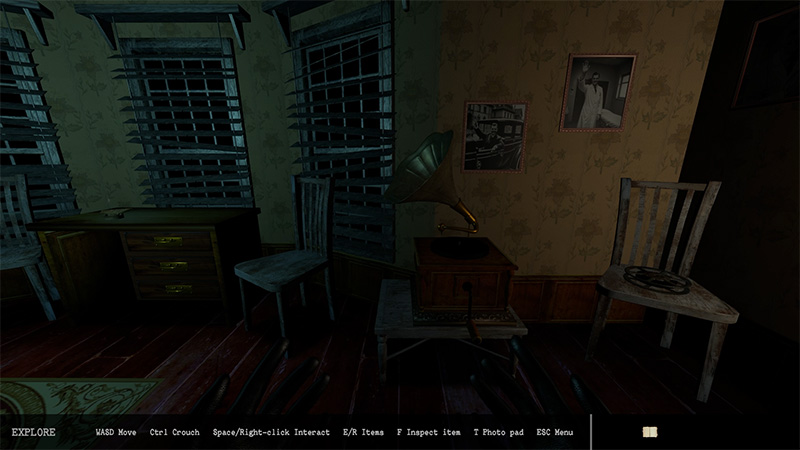
In the study room of Level 6 in the playtest build, three paintings hanging on the wall form the game’s central narrative clue: “The Meaning of Life.”
Each painting features only abbreviated letters, which I deduce stand for “Reproduce,” “Produce,” and “Die.” Approaching these artworks triggers dedicated audio tracks. This combination of visual and audio cues allows players to grasp the setting more intuitively and immerse themselves in the story.
When you use drugs to enter the hallucinatory state, the color palette, item representations, and sound effects across the entire room shift accordingly. Each room offers a unique variation, delivering a distinct experience every time.
Puzzle Design
The playtest puzzles hit a sweet spot in difficulty. While there are no explicit hints, the mechanics are easy to grasp. Because the environments are dimly lit, finding items during your first playthrough might take some time. However, item locations are fixed, so a second run feels much smoother. Passwords are randomly generated on each run while staying in fixed locations, which maintains replayability without causing frustrating dead ends.
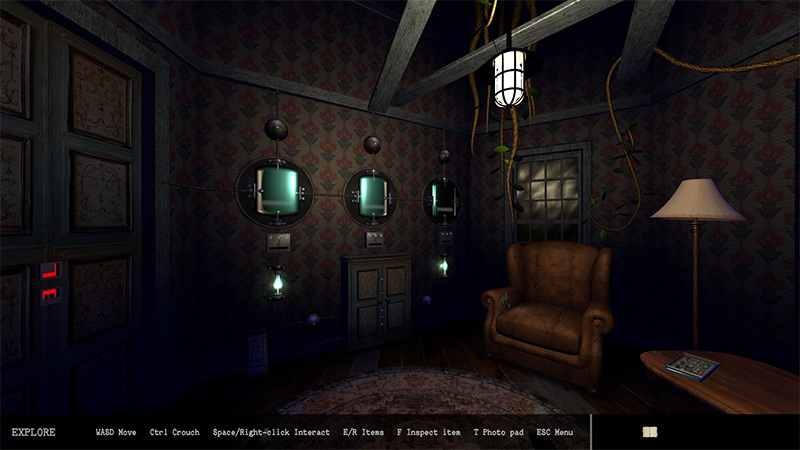
It is worth mentioning that if you clear a stage in normal mode first, trying the hallucinatory path for the first time can be a bit disorienting due to the different solution paths. But there’s no need to worry—as mentioned earlier, items and mechanisms remain in fixed locations within compact rooms, so careful exploration will get you oriented quickly.
The mechanical interactions are smooth, and the puzzle contraptions in the hallucinatory mode are genuinely impressive. Looking back at the electrical panel transformed into a statue, the design strikes a balance between human aesthetics and grotesque decoration. While not terrifying, it drives the unsettling mood to its peak. The puzzle logic is consistently sound; once you observe the room layout and setting, solutions usually come naturally, confirming the well-balanced difficulty curve.
Background Story
All the mechanical devices and visual elements in the game ultimately serve the narrative. Beyond the visual art, what captivated me most was the story—the process of personally searching for clues and piecing together the truth is fascinating. The story blends WWII Nazi history, forbidden experiments, and sci-fi suspense, which happens to be a mix of genres I have always loved.
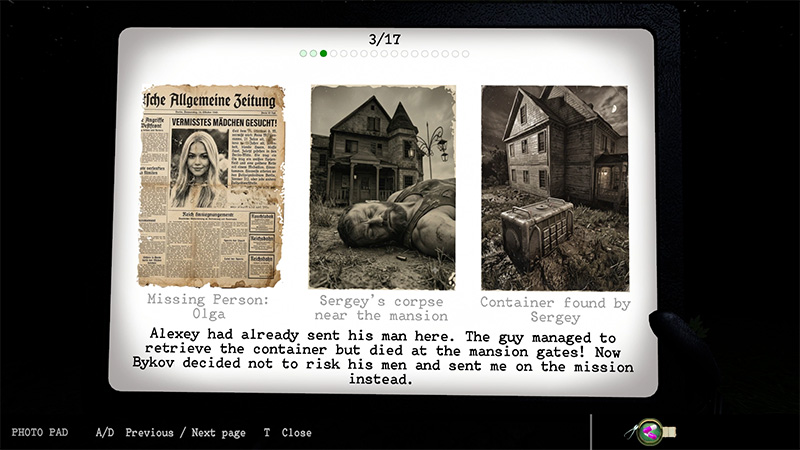
Here is a narrative retelling of the story based on the fragments of clues I gathered during the playtest (purely personal interpretation):
Night envelops the desolate ancient mansion. Under the faint, flickering light, a buried dark chapter from WWII begins to reveal its gruesome outline.
You are an investigator venturing deep into danger. As you push open one heavy door after another, scattered classified files and experiment journals reveal a grim reality: this place was once a secret Nazi base for forbidden experiments.
During the war, fanatical Nazi scientists discovered three mysterious triptych paintings titled The Meaning of Life. Symbolizing Reproduce, Produce, and Die, these were no ordinary works of art. They were weapons containing terrifying psychological pollution and supernatural power, driven by a wild ambition to turn the tide of WWII. To withstand the madness and death inflicted by the paintings, the scientists developed a psychoactive drug named “Denpa.” Only under its influence could one unlock a heightened sense of perception to interact with hidden mechanisms.
However, fully activating the paintings’ power required an extremely rare subject: a “Key Medium.”
Years later, Olga, the daughter of a mob boss, was targeted and abducted by remaining faction members due to her rare medium potential. She was dragged into the depths of the mansion to serve as a “living battery” to activate the paintings. Although her father sent his henchman, Sergey, to rescue her, he failed to save the young woman and was cold-bloodedly executed in front of the main gate, becoming just another “uninvited guest” cleaned up in the journals.
Today, the mansion’s backup generator is shut off, leaving the underground laboratory silent and dark. As the investigator, you must consume mind-altering drugs that blur reality and hallucination, navigating a nightmare filled with restraints, mechanical tentacles, and sinister devices to find power sources and scattered equipment.
As the roar of the diesel generator shatters the silence once more and dark red indicator lights turn on one by one, the password lock to the underground laboratory snaps open. Awaiting you ahead is not only the endangered Olga, but also the ultimate sanity-consuming darkness hidden behind The Meaning of Life…
Closing Thoughts
Overall, Dark Trip stands out among escape-room games thanks to its dual-state puzzle mechanics and high-impact dark aesthetics. For players who enjoy brain-teasing atmospheres and distinctive art styles, this title is definitely worth adding to your wishlist and keeping an eye on.
Dark Trip is scheduled to launch on Steam on October 30, 2026, and is available for wishlisting now.
Note: This article is based on the playtest version. The background story represents my personal interpretation rather than official confirmation, and content in the final release may vary.
About the Author