Video sourced from the GAMEAY YouTube channel. © 2026 Tech Turtles.
On the ocean floor of Enceladus, I was swallowed whole by a leviathan.
This is not a metaphor. In one of the levels of The Subminer, a sci-fi roguelite mining game developed by Tech Turtles, a massive creature gulped down my submarine—with me inside it. As gastric acid corroded the hull, I had to scramble for an escape route before the vessel blew up completely.
That feeling of claustrophobic tension is precisely where The Subminer shines.
Used under fair use for commentary, criticism, and educational purposes.
Set in the deep waters of a distant world, the game puts you in control of a submarine tasked with mining resources, rescuing human engineers, and staying alert for whatever creatures lurk in the dark. Every dive is a gamble: dying means losing everything, while a successful extraction allows you to bring back resources, build out your base, upgrade equipment, and recover missing personnel. Every outcome hinges on your choices.
The Subminer is currently available on Steam, with open playtest access. As of writing, the store page lists a 2026 release window, with an exact date yet to be announced.
Story: Humanity’s Last Hope
With Earth’s resources nearly depleted, a research base on Enceladus was once humanity’s vital lifeline. However, a catastrophic explosion destroyed the facility, severing communications, halting mining operations, and deepening Earth’s crisis.
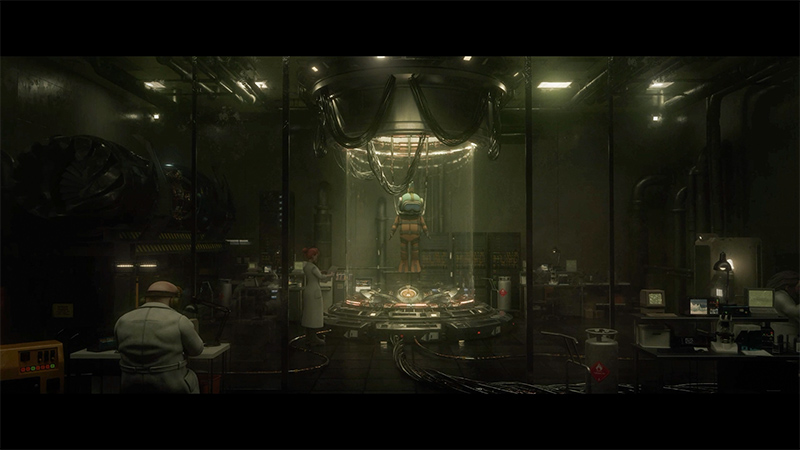
In desperation, humanity pooled its remaining resources to create a bionic prototype engineered for impossible missions. Sent as a last resort, the android has two main objectives: dive into the depths of Enceladus to restart mining operations for critical resources, and investigate the truth behind the explosion along the way.
I really like the sci-fi setting of this story. Elements like Enceladus’s deep-sea environment, submarine operations, and unknown creatures are inherently appealing. As I navigate the ocean depths—mining while investigating the explosion—those scattered clues keep the mystery constantly on my mind. That sense of the unknown hidden within routine tasks is easily the most compelling part of the game.
Visuals and Sound: Deep-Sea Dread Meets Cassettepunk
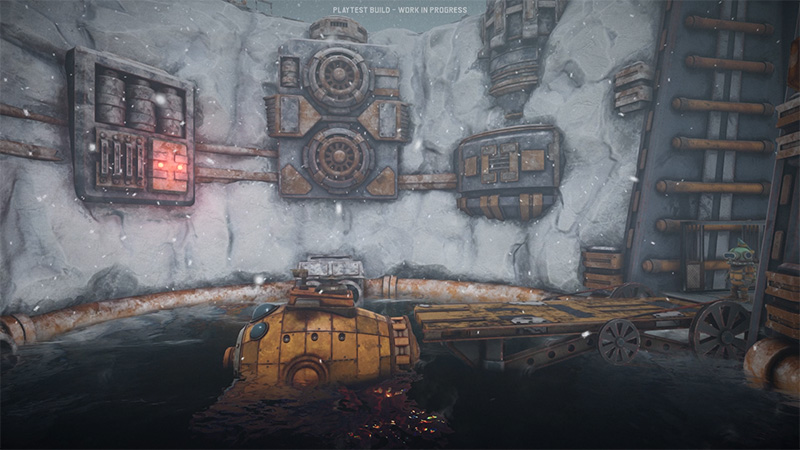
A good narrative requires strong audiovisual presentation to support it. The Subminer uses a 2.5D perspective that enhances immersion, capturing the oppressive atmosphere of the deep sea. The stout, endearing design of the submarine contrasts sharply with the stark, industrial look of the mining base, while the occasional shadow of a creature passing by the camera keeps you on edge. This distinct style translates the written setup into an effective visual experience.
On the gameplay side, everything ran smoothly during my playtest, though I did catch myself wishing for a manual save option. It’s certainly not a dealbreaker—I just personally prefer having the flexibility to clear out old save files or start fresh on a new slot.
Core Gameplay: High Stakes Without Oxygen Limits
Unlike many underwater titles, The Subminer dispenses with an oxygen meter—you are operating an android, after all. Your main focus is managing the health of both your submarine and yourself. As long as you avoid sea creatures and naval mines, you can mine at a relaxed pace. That does not mean the game is easy, however. Its core appeal relies on high-risk mechanics: if you die, all gathered materials and equipment are lost, rendering the run a total loss. This Soulslike penalty system is not overly punishing, but it forces you to stay vigilant.
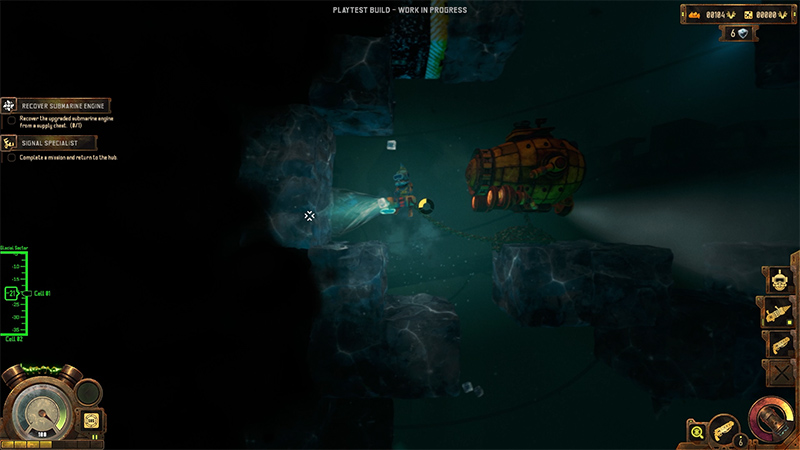
I learned this lesson the hard way early in the playtest. After my submarine exploded, an animation played showing a return to base, which led me to assume my gathered resources were safe. It was only when the “Mission Failed” screen appeared with an empty inventory that I realized how death actually worked in the game.
Certain sea creatures also use frustrating hit-and-run tactics, striking once and circling back later to attack again. On several occasions, these encounters prevented me from reaching a safe extraction point, costing me an entire run’s worth of materials. For new players, the key takeaway is simple: when dealing with persistent enemies, prioritize keeping your submarine intact over mining extra resources. Plan your escape route or eliminate the threat first—making it back alive with your haul is always the main priority.
Loop and Progression
The game features no mid-run inventory management or on-the-fly loadout changes. All adjustments must be made before departing or after returning to base. The core loop is straightforward: mine resources → locate surviving engineers → construct buildings and unlock abilities → upgrade gear → explore further. Each engineer specializes in a specific field, making their recovery central to progression. While the loop follows a familiar structure, the variety of questlines alongside gear and building unlocks keeps subsequent runs engaging.
Combat and Gathering
Your submarine serves as both a vehicle and a mobile fortress, equipped with energy shields, torpedo launchers, and mounted guns. When exiting the sub, your character is equipped with a handgun, a speed-boost swimming device, and emergency recall gear for survival. Crucially, ammunition and defensive items cost raw minerals to replenish, making resource management essential.
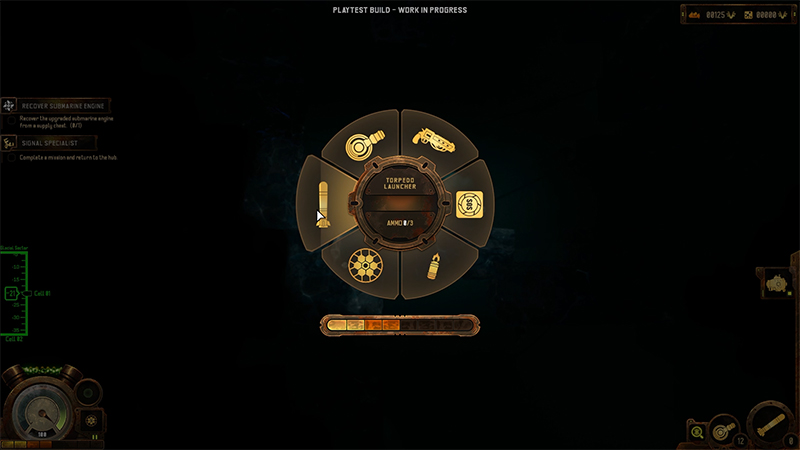
Heavy weaponry doubles as an efficient mining tool. Torpedoes can clear out mineral deposits over a wide area, while upgraded multi-directional depth charges improve gathering efficiency significantly. Additionally, hand drills and personal equipment can be upgraded or replaced using collected resources or items found on the ocean floor.
Level Design: Exploration, Puzzles, and Hazards
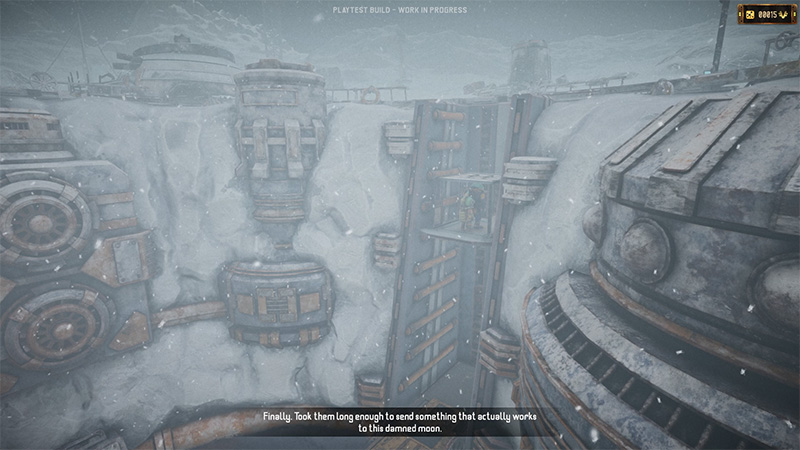
Levels are structured as interconnected underwater sectors linked by airlocks. Most areas are composed of ice structures and mineral deposits. Beyond hostile creatures, players must navigate environmental hazards like falling icicles and floating mines.
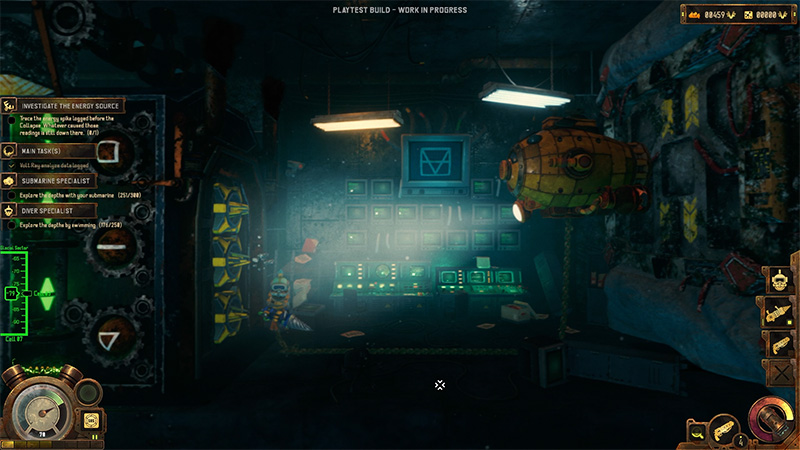
To balance the gameplay pacing, the game incorporates subtle puzzle elements. For instance, the playtest featured a locked door requiring a symbol sequence input (“Square → Line → Triangle”), adding variety to exploration. Meanwhile, large predatory fish patrolling the dark act as both tactical obstacles and memorable encounters, fitting well within the game’s sci-fi thriller theme.
Playtest Feedback and Outlook
For a game still in testing, The Subminer feels remarkably complete. I did encounter one issue in the later levels where the screen suffered a hard freeze and inputs stopped responding. Fortunately, opening the pause menu and restarting the level resolved the issue, and it did not reoccur. In discussions with other testers, a few mentioned encountering the same freeze in that specific area, suggesting it may be tied to a location-specific trigger.
Overall, The Subminer is a promising indie title. It balances deep-sea horror and sci-fi exploration well across its narrative, presentation, and core loop. The playtest ends on a solid cliffhanger—a jagged-toothed behemoth swimming directly toward the player’s submarine. Will the full release feature full-blown boss fights? That remains an open question.
Note: This preview is based on an early playtest build of The Subminer. Features and content may change in the final release.
About the Author