Floralis is entirely content-driven, with puzzle-solving as its absolute core. There are zero explicit hints or hand-holding—you’re forced to observe the environment, make your own calls, and figure things out completely on your own.
Video sourced from the GAMEAY YouTube channel. © 2026 SolidCore Games.
The release date on Steam isn’t announced yet, but you can already wishlist it. The Demo only supports English and Ukrainian, though the store page lists 14 languages for the full release.
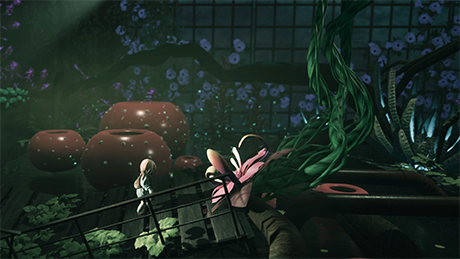
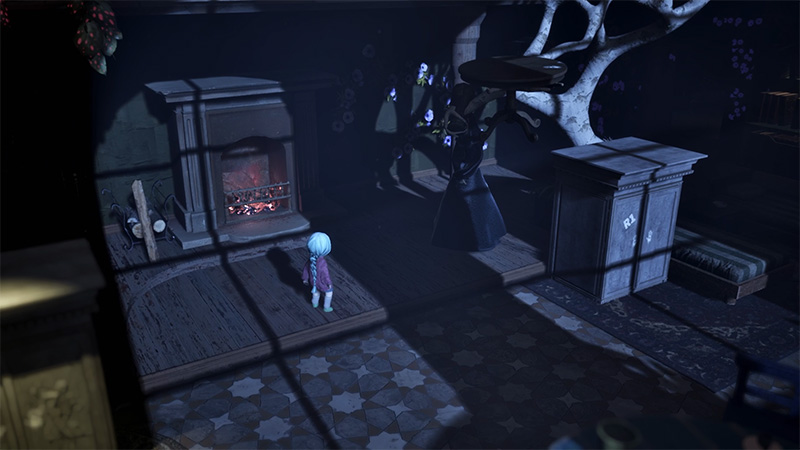
Visually, the game leans hard into absolute darkness—and I mean literal screen darkness. You can turn the brightness up in the settings, but I feel like that totally ruins the atmosphere and visual texture. The real charm and immersion come from those faint glimmers of light cutting through the dark, which tie deeply into the narrative.
Used under fair use for commentary, criticism, and educational purposes.
The world itself is oppressive and eerie, ruled by carnivorous plants. Set against that backdrop, the adorable twin sisters create a wild contrast—like a tiny beacon of light in endless dark. The visual tension is off the charts, and it really sticks with you. It nails that “fear comes from the unknown darkness” vibe completely.
The lore pulled me in right away: in a world run by flesh-eating plants, human twin sisters are birthed by a single tree. When one is snatched by a mysterious figure, you play as the other to track her down and figure out what you actually are. How does a tree even birth human twins in the first place? I’m dying to know where the story goes, though the Demo is too short to give away much of the bigger picture.
Built on Unreal Engine, the 3D perspective really bumps up the environmental realism. Beyond just looking around and solving puzzles, it’s all about controlling your rhythm: running, jumping, dodging enemies, and using environmental objects. First time through, it’s definitely tricky. With zero prompts, whether you progress or fail comes entirely down to how well you read the room—deciding when to hide, where to step, and how fast to move.
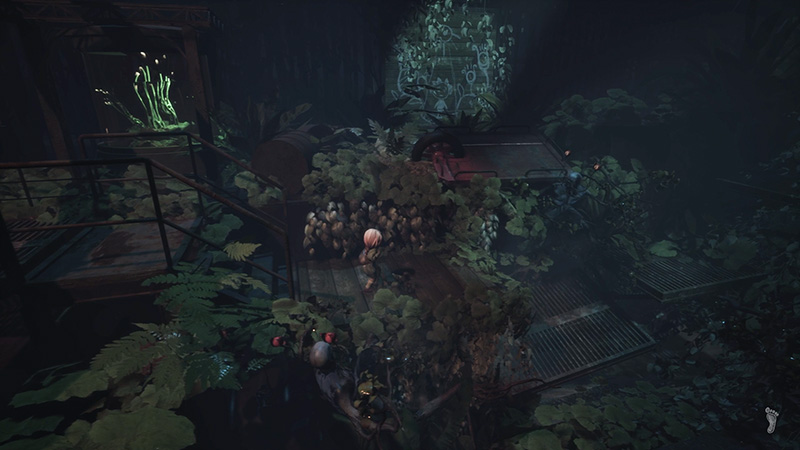
Performance-wise, despite being on Unreal Engine, the specs are surprisingly forgiving. The official minimum and recommended specs are actually identical: Windows 10, Quad-core Intel/AMD at 2.5 GHz or faster, DirectX 11, and 3 GB of space. I ran it on a pretty mid-tier setup, and it handled high graphics without a hitch—super smooth, no stuttering or frame drops at all.
If you know what you’re doing, a clean run through the Demo takes maybe 20 minutes. My first playthrough took almost an hour because I was constantly testing ideas and dying/retrying. The stand-out moment for me was this timed floodgate puzzle: once you let go of the switch, a carnivorous plant’s lure light starts sweeping back, giving you a tiny window to sprint across.
I missed it over and over by a hair, and the panic just made me choke more. But after dozens of tries, I finally nailed the timing. When I went back to record video, I actually cleared it on the very first try—I was honestly kind of shocked myself.
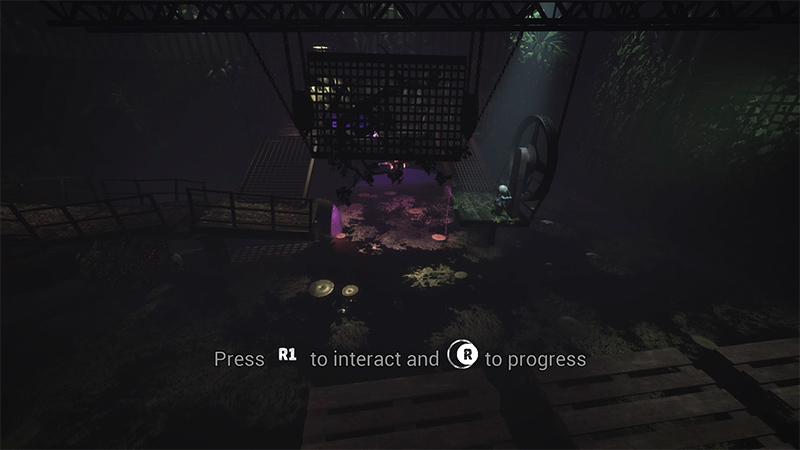
That’s the beauty of hint-free puzzle design. It forces you to actually get how the game works instead of just blindly following a marker. Sure, it can get frustrating on your first run, but that’s also the whole draw: you have to pay attention and connect the dots in your head to piece together what’s actually happening.
Control-wise, everything feels snappy, but the 3D angle can definitely mess with your depth perception. Whenever I had to do consecutive jumps across hazards, I kept falling off. I had the exact same issue back when I played Moss: The Forgotten Relic—it’s not a bug or anything, just something you have to adjust to.
Overall? I loved it. The Demo alone scores super high in my book, and it’s an easy wishlist recommendation.
One last quick note for anyone jumping in for the first time: there IS a sprint button! I didn’t bother checking the keybinds at first and ended up stuck on a few spots forever, only to realize later I was supposed to be running the whole time.
Note: This write-up is based on the Demo version, so things in the final build might change.
About the Author