Note: This article is based on my personal analysis of the official gameplay showcase. All details are subject to change in the final release.
The Blood Message official YouTube channel recently released a 19-minute gameplay showcase.
Covering story progression, head-on combat, stealth assassinations, and high-stakes escape sequences, the game’s overall level of polish has far exceeded my expectations.
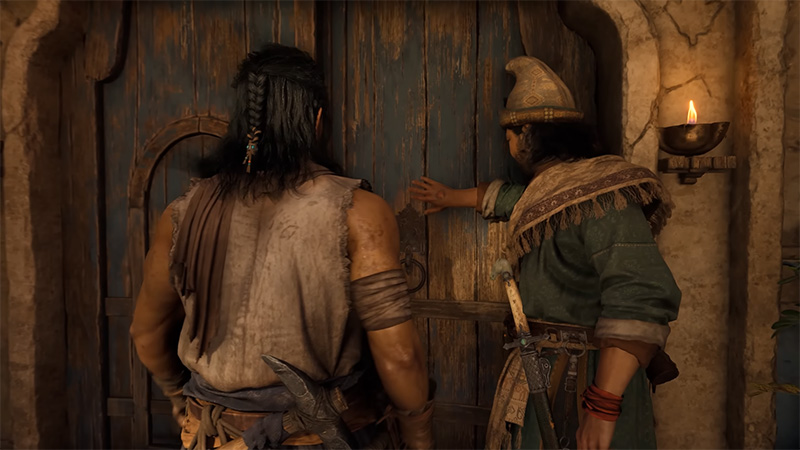
Used under fair use for commentary, criticism, and educational purposes.
Ever since the initial teaser dropped, I’ve had high hopes for this title. However, limited information at the time meant I could only speculate on its core identity as an action game.
Watching this gameplay reveal has not only validated my initial impressions but has also pleasantly surprised me with its fluid combat transitions and sheer sense of immersion.
The Narrative
The story is set in the year 848 AD along China’s northwestern frontier. By this period, the region had been cut off from the central imperial dynasty for over six decades, transforming into an isolated, contested territory fought over by rival factions.
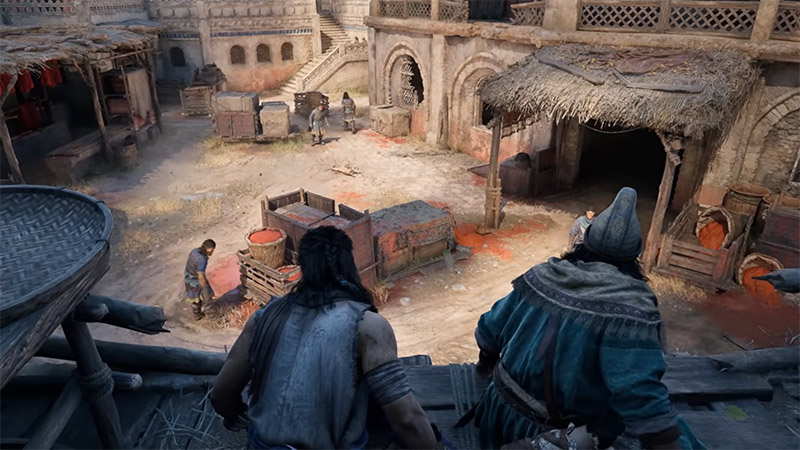
A secret letter that holds the fate of this homeland drives the entire plot—a letter the enemy slaughtered an entire village to obtain.
The protagonist is an unnamed messenger caught in the crossfire of war, who is also a father searching for his son. His struggle mirrors the plight of countless ordinary people caught in turbulent times, wishing only to return home, ward off invaders, and protect their loved ones.
Based on the showcase, the protagonist is already a wanted man, and his deepest anxiety at this moment is the safety of his son.
Through his dialogue with companions and the relentless waves of pursuing enemies, players can immediately feel the urgency of the situation and his internal distress.
The footage makes no mention of other family members, suggesting they might have already perished in the chaos of war, leaving his son as his only remaining bond.
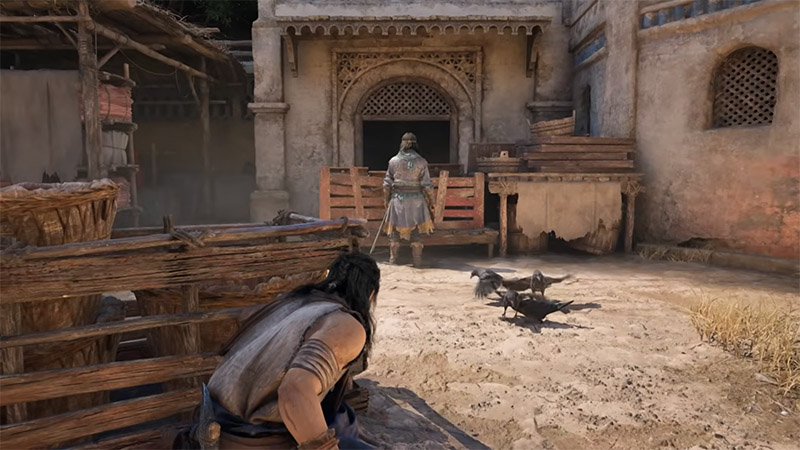
Unlike the omnipotent heroes seen in most action titles, the protagonist feels more like an ordinary man crushed by the wheels of history. This sense of being “ordinary” is not just confined to the narrative; it actively shapes the combat experience.
He lacks the effortless, crowd-clearing abilities of typical action heroes. Every swing of his blade carries a heavy sense of resistance and a desperate struggle for survival.
This allows players to truly feel the clumsy yet stubborn resilience of a father pushed to the brink to protect his child—a gritty realism that I find incredibly compelling.
Gameplay and Combat Performance
To my surprise, the showcase featured absolutely no user interface (UI) elements, such as health or stamina bars.
Many contemporary action games rely heavily on stamina systems to restrict a protagonist’s capabilities. Personally, I prefer experiences where character movement isn’t bound by visible resource bars, so I highly resonate with the apparent choice to omit stamina-related feedback.
I suspect the game might implement a dynamic health regeneration mechanic similar to Call of Duty, where health restores automatically as long as you avoid taking sustained damage. It is even possible that there is no stamina system at all.
Of course, we cannot rule out the possibility that the developers intentionally hid the HUD elements for the sake of immersion in this preview build, so this remains pure speculation.
Regardless of the underlying mechanics, the fluidity of combat aligns perfectly with the narrative tone.
The protagonist is capable in a fight, but his actions are always accompanied by a genuine sense of physical strain, completely discarding the effortless “hack-and-slash” power fantasy found in franchises like God of War or Assassin’s Creed.
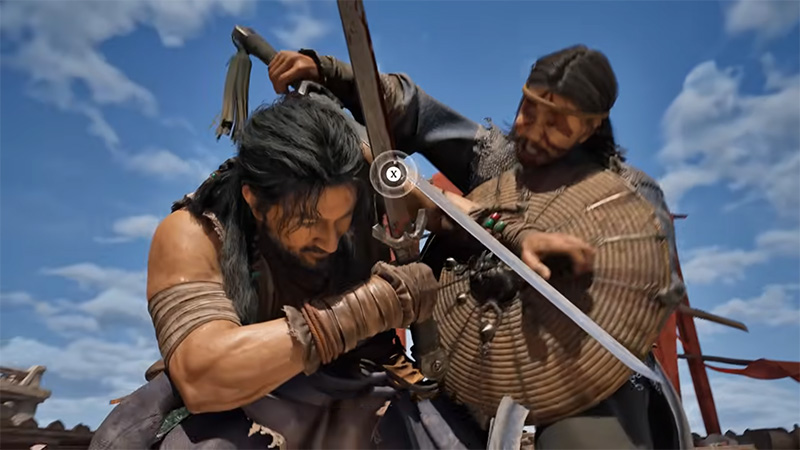
The transitions between animations are incredibly seamless, blurring the line between actual gameplay and cinematic cutscenes to deliver a grounded, restrained survival-combat experience reminiscent of The Last of Us.
Enemy behavior is equally impressive, breaking away from the cliché where AI enemies patiently wait their turn to attack.
The group encounters in the showcase look intensely pressuring; enemies actively look for openings, coordinate their assaults, and maintain constant pressure.
While the protagonist’s fluid dodges and parries look as seamless as a choreographed movie, they also suggest that actual gameplay will demand exceptionally sharp reflexes and quick decision-making from the player.
Beyond open confrontations, the game retains a core stealth loop centered around dynamic enemy awareness and multi-path approaches. It supports stealth takedowns, NPC-assisted kills, and environmental executions.
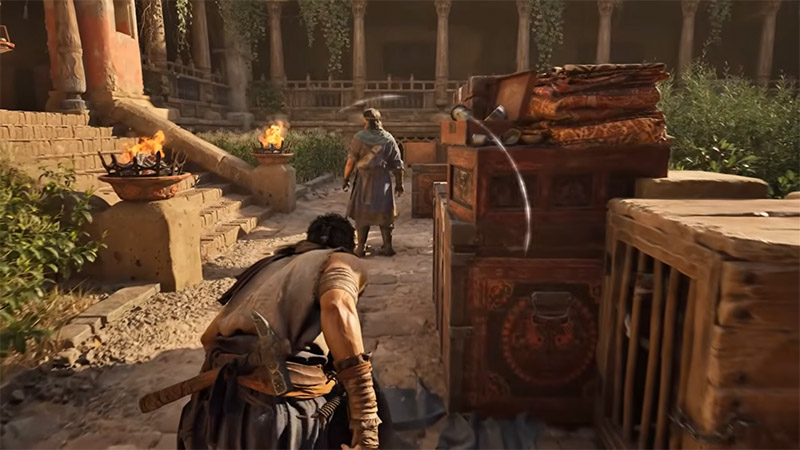
The enemy AI behaves intelligently, showing a sharp awareness of their surroundings.
Furthermore, pivotal narrative moments transition naturally into open combat rather than awkwardly interrupting the pace of exploration. This creates a cohesive loop with the organic encounters mentioned earlier, ensuring the story and gameplay feel fully integrated.
Final Thoughts
This gameplay showcase for Blood Message does more than just justify the anticipation built by its first teaser; it establishes a uniquely distinct identity through its tightly unified narrative and gameplay.
Instead of chasing the hollow gratification of mainstream action games, it opts for a more restrained, deeply immersive path.
If the final product can maintain the level of polish shown in this preview, this game will undoubtedly be one to watch for players who appreciate realism and narrative-driven experiences.
I will certainly keep a close eye on future showcases and updates, and look forward to sharing more thoughts as they arrive.
About the Author