I’ve stumbled upon a creative and uniquely themed game called Pathogenic. While it is essentially a flight-based shooter, its artistic vision and RPG upgrade elements make it incredibly addictive.
There is no official release date yet, but a hefty demo is currently available on Steam. It offers plenty of variety and is well worth playing through multiple times. After sinking several hours into it, I wanted to break down the core mechanics and what makes this game stand out.
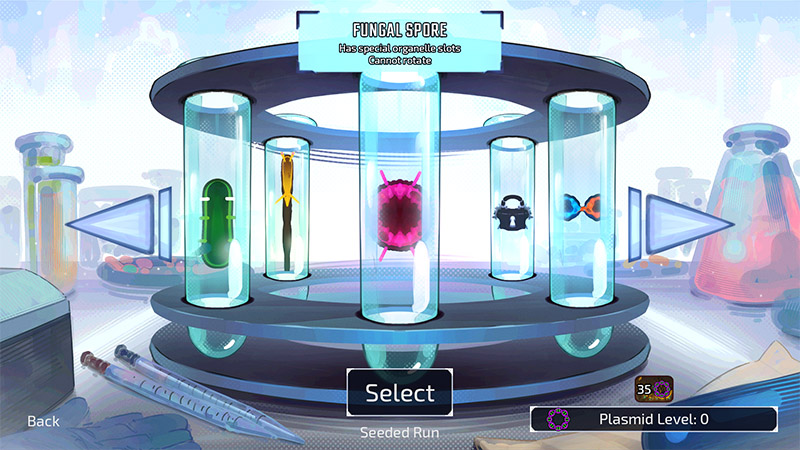
Used under fair use for commentary and educational purposes.
A Unique Perspective: Playing as the Pathogen
The core concept of Pathogenic is brilliant. Instead of playing the typical hero saving the world, you are the disease. You play as a lone parasite navigating the human body, locked in a life-or-death struggle against the immune system. This “villain’s perspective” is immediately gripping, offering a front-row seat to the brutal survival competition happening at a microscopic level.
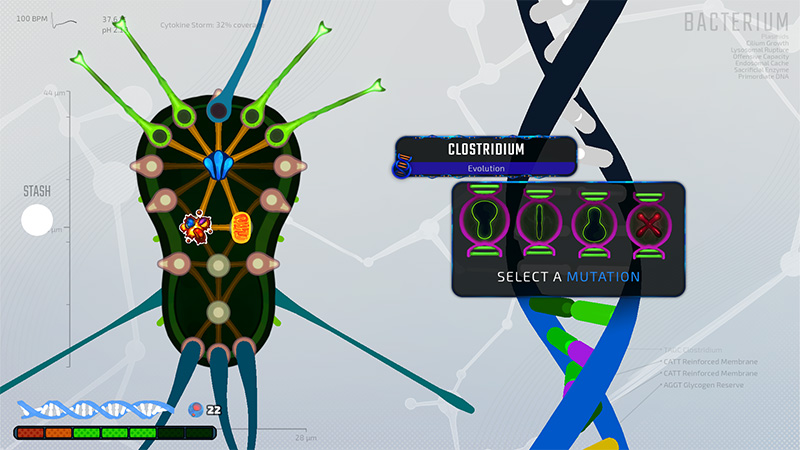
Deep Evolution: Customizing Your Ultimate Build
The standout feature is the organelle collection and combination system. By defeating hostile cells, you harvest various organelles to graft onto your own body.
The variety is impressive: flagella for mobility, mitochondria for energy, secretors for ranged attacks, and spikes for melee combat. With dozens of unique parts to mix and match, the strategic depth is immense. It encourages constant experimentation to find powerful synergies. As the game description suggests, you are truly “crafting an unstoppable plague.” This high level of freedom in your evolution is the heart of the game’s charm.
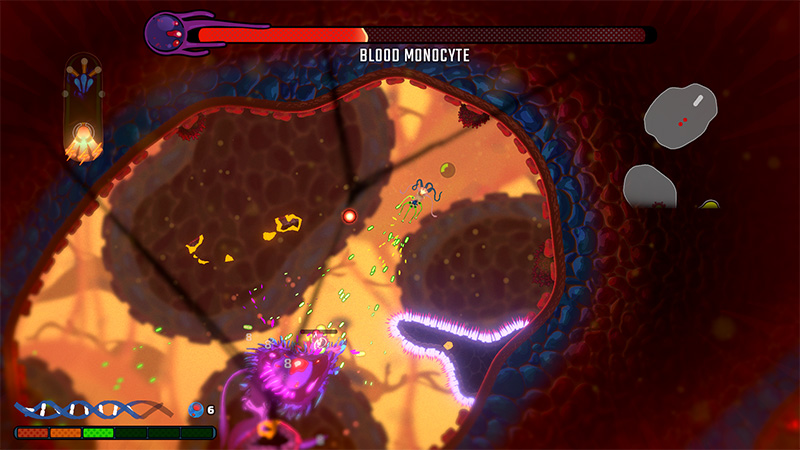
Diverse Challenges: From Immune Cells to Organ Bosses
The enemy variety is equally impressive. You aren’t just fighting standard immune cells like macrophages and T-cells; you’ll also clash with rival parasites like tapeworms and protists. The real highlights, however, are the massive bosses lurking deep within various organs. These encounters are a true test of both your character build and your mechanical skill.
The game appears to use a procedurally generated map system, ensuring every run feels different. From the winding airways of the lungs to the rhythmic chambers of the heart and the complex neural networks of the brain, each biome has its own distinct visual identity and gameplay mechanics.
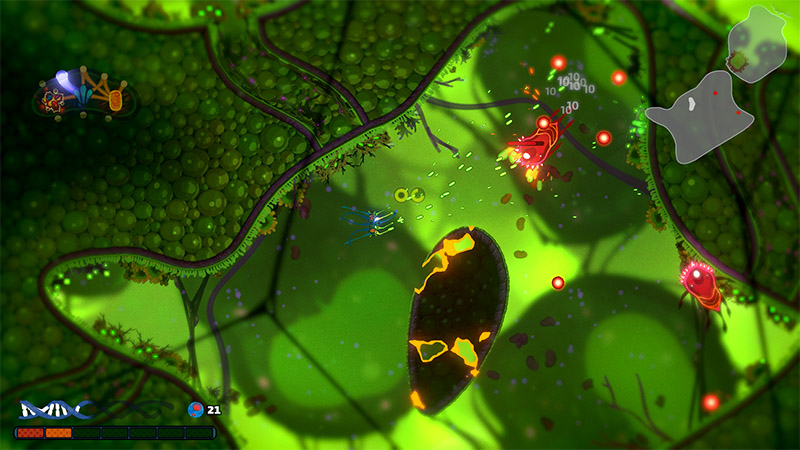
Technical Highlights: Soft-Body Physics and Organic Aesthetics
Pathogenic utilizes an engine focused on soft-body physics, giving the world a very specific tactile feel. Every cell, enemy, and projectile moves with a fluid, natural grace. Combined with a vibrant color palette, it creates a microscopic world that feels both scientifically grounded and dreamlike.
This attention to detail breathes new life into the classic shooter formula. In the heat of combat, you can feel the weight and feedback of every movement. This “organic” sense of motion is something many similar games lack.
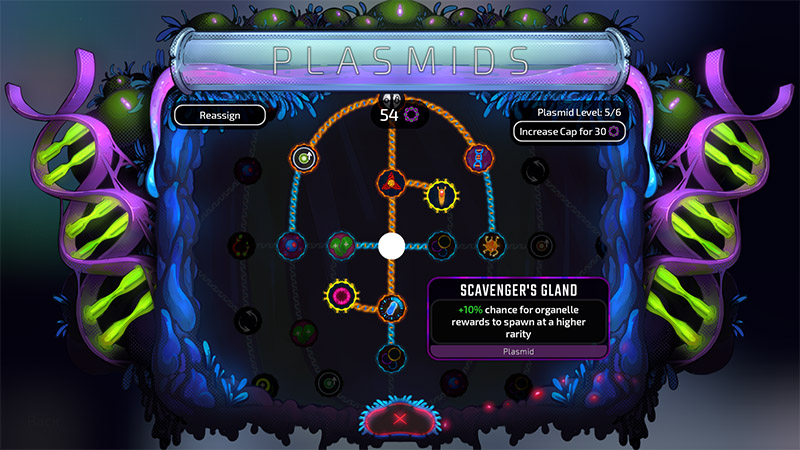
Meta-Progression: The Joy of Permanent Growth
Beyond the power-ups you find during a single run, Pathogenic features a solid meta-progression system. You collect “Plasmid Fragments” to unlock permanent upgrades on a Plasmid Tree. Since each parasite has its own independent tree, you can lean into specific playstyles that suit you. This design perfectly balances the randomness of a roguelite with a sense of long-term achievement, giving you a reason to jump back in even after a tough loss.
It’s hard to capture the full vibe of this game with just words, so I highly recommend checking out the gameplay video at the top of this post to see it in action.
Final Thoughts
This is a demo version, and despite several hours of play, I have yet to complete it; my progress currently concludes at the Liver stage.
The game offers considerable freedom through diverse skill and weapon combinations, though obtaining strong equipment relies on random drops. Upon death, players must restart from the first level with no progress carried forward.
Reaching the later stages, therefore, requires unlocking more character abilities, which inevitably involves repeated runs through earlier content.
About the Author