Understanding Jinyiwei: History, Setting, and Gameplay of A Whisper of Fall: Jinyiwei
Notes
- Historical information regarding the Jinyiwei (Embroidered Uniform Guard) is derived from online sources and personal summaries, and may not be 100% historically accurate.
- The game’s narrative setting is based on personal interpretation of currently available materials; the final version shall be subject to official announcements by the game developers.
The project has now been officially titled A Whisper of Fall: Jinyiwei and has been listed on Steam. For brevity, this article will refer to it simply as Jinyiwei.
Timeline of Development
- March 2022: Project: Jinyiwei debuted with its first gameplay demonstration video, showcasing early combat mechanics, wall-running and rooftop traversal, and a prototype of the time-rewind mechanic, which garnered significant public attention.
- July 2024: Project: Jinyiwei released its second promotional trailer, offered offline demo sessions, and announced its inclusion in Sony’s “China Hero Project.”
- Mid-2024 through end of 2025: No official name was revealed, and no updates were released. Rumors circulated within the community suggesting the project had stalled, while the development team remained silent.
- January 29, 2026: The game was officially named A Whisper of Fall: Jinyiwei, accompanied by the release of an official trailer and the launch of its Steam page. The trailer featured extensive gameplay footage, leading to speculation that the full release is imminent.
What Was the Jinyiwei?
Before discussing the game, it’s important to understand what the Jinyiwei actually was.
The Jinyiwei is not a mythological tale,it was a real historical institution that existed in China for an extended period.
The Jinyiwei was a special military agency established during China’s Ming Dynasty (1368–1644) and answered directly to the emperor. Its duties included guarding the imperial palace and performing ceremonial functions, but it also engaged in criminal investigations, arrests, and interrogations. At the time, it held a unique status and wielded considerable authority. Known for their distinctive feiyu robes and xiuchun sabers, and occupying a role that blended elements of warrior, secret agent, and law enforcer, the Jinyiwei have since become an iconic and compelling figure in later literature, film, and video games often portrayed in narratives exploring themes of loyalty, political intrigue, and fate.
Functionally, the Jinyiwei combined responsibilities akin to those of modern-day special security forces, detectives, and covert operatives,but served exclusively at the emperor’s command and operated outside the constraints of ordinary legal procedures.
People sometimes ask whether the Jinyiwei were “good” or “evil.”
The Jinyiwei was not a simple job title but an institution directly controlled by the emperor. It carried no inherent moral alignment; rather, it functioned as a double-edged sword. When led by upright officials, it could uphold order and justice. When manipulated by those with personal ambitions, it became a tool for eliminating political rivals. Throughout history, the Jinyiwei’s role remained centered on imperial authority,they were not conventional law enforcers but extensions of the emperor’s will, tasked with neutralizing any perceived threats to dynastic stability.
That said, there were indeed periods in which the Jinyiwei acquired a negative reputation, largely due to being exploited by powerful individuals to carry out abuses of power.
Establishment and Dissolution of the Jinyiwei
The Jinyiwei was formally established in 1382 by the Hongwu Emperor (Zhu Yuanzhang), founder of the Ming Dynasty. Initially responsible for palace security and imperial ceremonial duties, it gradually acquired judicial powers,including the authority to investigate cases, make arrests, and conduct interrogations. Over the Ming Dynasty’s nearly 260-year span, the Jinyiwei’s influence fluctuated, with its powers periodically curtailed and then restored,but it always remained under the emperor’s direct control.
In 1644, with the fall of the Ming Dynasty, the Jinyiwei effectively ceased to exist. The succeeding Qing Dynasty officially abolished the institution in 1645, reorganizing its remnants into the Luanyiwei (Imperial Regalia Guard), which retained only ceremonial and protective functions and held no investigative, judicial, or intelligence-gathering authority.
Related Media
If you’re interested in cinematic portrayals of the Jinyiwei, you might consider watching the 2010 wuxia film 14 Blades, starring Donnie Yen.
Note: This film is a work of martial arts fiction and should not be regarded as a historical record. The depiction of the Jinyiwei including its organizational structure, narrative, weaponry, and character dynamics is a product of artistic license and does not reflect actual historical facts.
Game Narrative Setting
The story of Jinyiwei is set in 1621 the first year of the Tianqi reign during the late Ming Dynasty. At this time, the imperial court was dominated by powerful eunuchs, regional unrest was widespread, and popular uprisings were on the rise.
The protagonist begins as an ordinary boatman living in the tranquil water towns of Jiangnan. A sudden tragedy claims his family, leaving him with nothing. He is subsequently taken in by a clandestine underground organization known as the Shi Yin Si (“Bureau of Urban Shadows”), composed of fugitives, former warriors, and information brokers whose goal is to challenge the ruling powers.
To survive and uncover the truth behind his loss, the protagonist undergoes specialized training and infiltrates the Jinyiwei under a forged identity, becoming a Xiaowei (junior officer) within the Northern Depot the secret police arm of the Jinyiwei. Officially, his duties involve carrying out the emperor’s covert orders and hunting down rebels. Unofficially, he must gather intelligence and execute covert operations for the Shi Yin Si.
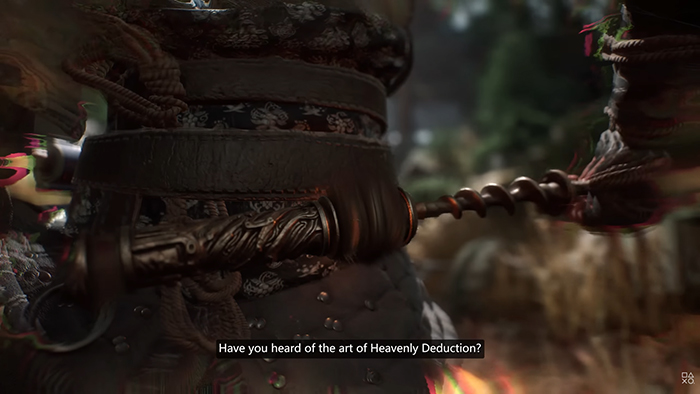
A central feature of the game is the protagonist’s unique ability called “Tuiyan” (Deduction/Inference). This power allows him to rewind time within a single mission, explore alternative choices, and observe the consequences of each decision. However, every use drains his mental stamina, limiting how frequently he can rewind.
Through a series of meticulously crafted levels, the game presents a morally complex world without clear-cut heroes or villains. Players must navigate the protagonist’s stance among the imperial court, the underworld, and the common people and every choice will shape the narrative’s trajectory and determine one of multiple possible endings.
Gameplay Overview
Jinyiwei is a wuxia-themed action RPG (ARPG). The developers have explicitly stated in hands-on preview events that it is not a Soulslike game, nor is it an open-world title. Instead, it is fundamentally narrative-driven, structured into distinct chapters that players progress through sequentially.
The core gameplay mechanic is the “Tuiyan” system. The protagonist carries an artifact called the “Tianyan Scroll” (Book of Celestial Deduction), which enables him to rewind time to a prior checkpoint within the current chapter and make different decisions.
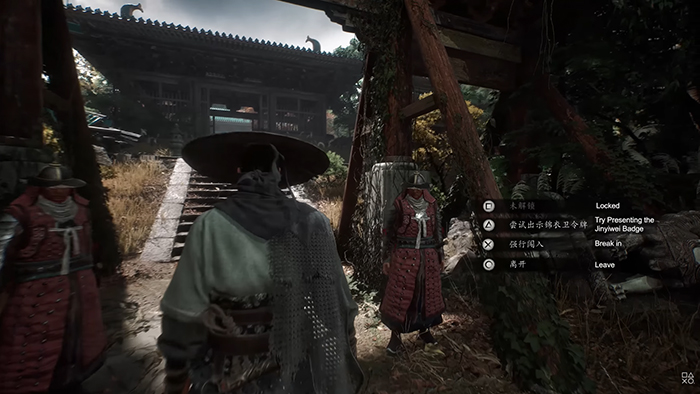
Crucially, key items obtained before rewinding are retained after the reset. This means players can leverage knowledge and resources from a previous attempt to unlock new possibilities such as peaceful resolutions or hidden storylines,that were previously inaccessible.
Example: On your first entry into a guarded area, certain dialogue or stealth options may be locked. You might choose to fight your way through, defeat the guards, and secure a critical item. After activating “Tuiyan,” you rewind to just before entering the area. To NPCs, you never appeared,but you still possess the item. This now unlocks alternative paths, such as bypassing combat entirely or triggering secret interactions.
Thanks to this system, the game supports multiple branching narratives and varied endings, with each rewind potentially leading to dramatically different outcomes.
Although not a Soulslike, the game does include a character progression system. Each chapter features a semi-linear map with multiple exploration routes and hidden areas, encouraging replayability and diverse playstyles.
Combat and UI Mechanics
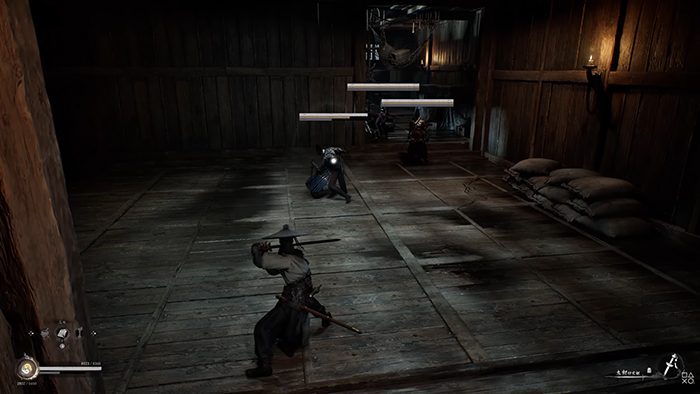
- Health: Decreases when struck by enemies. If reduced to zero, the mission fails.
- Stamina: Consumed for attacking, dodging, and blocking. Blocking enemy strikes continuously drains stamina. If stamina is depleted, the player cannot block and becomes vulnerable to being staggered or broken.
- Ultimate Gauge: Fills gradually through dealing damage with basic attacks and taking hits. When full, the player can unleash a powerful special skill that deals significant damage.
The game offers multiple weapon types, each tied to a unique moveset. Switching weapons automatically changes the available combat techniques, allowing players to adapt their tactics based on enemy types or preferred fighting styles.
Personal Perspective
A Whisper of Fall: Jinyiwei integrates wuxia-inspired action with a time-rewind mechanic in a cohesive way. The “Tuiyan” system is far more than a simple retry function,it empowers players to experiment with divergent choices within the same scenario and witness the tangible consequences of each path.
The pacing is tight, the combat offers meaningful depth, and the narrative avoids simplistic moral binaries. If you appreciate story-driven ARPGs with branching narratives and multiple endings, this is a title worth watching.
Note: All descriptions of the game reflect personal interpretation based on currently available information. Final details are subject to official confirmation by the developers.
About the Author