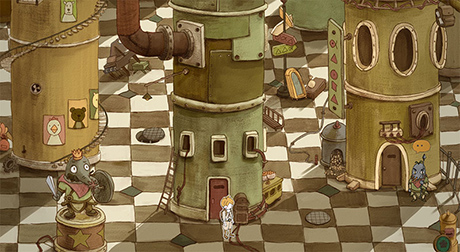
Genigods: Nezha is an action game developed by Genigods Lab Lab using Unreal Engine 5.
It currently has a store page on Steam, but the release date has not been announced.
The game’s setting is based on Chinese mythological stories, similar in style to Black Myth: Wukong.
To understand the game’s setting, we first need to introduce the relevant figures from the original Chinese myths:
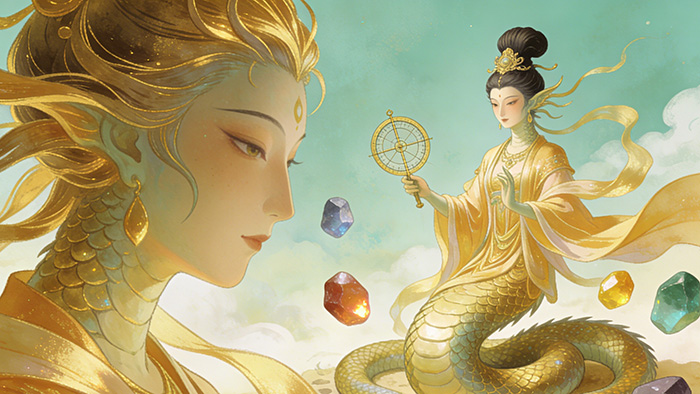
Nüwa:
Nüwa is the goddess who created humanity in Chinese mythology. She molded the first human from yellow clay.
Later, the sky broke apart, the earth collapsed, floods spread everywhere, and wild beasts ran rampant.
Nüwa melted stones of five colors to patch the sky, used the four legs of a giant turtle to prop up the four corners of the world, controlled the floods, and killed the evil dragons threatening humankind, thereby saving humanity. For this, she is called “Mother of Humankind” and “Savior of the World.”
In traditional stories, she does not interfere in human conflicts; she only guards the cosmic order from the heavens.
AI-generated artwork by GAMEAY, © 2026.
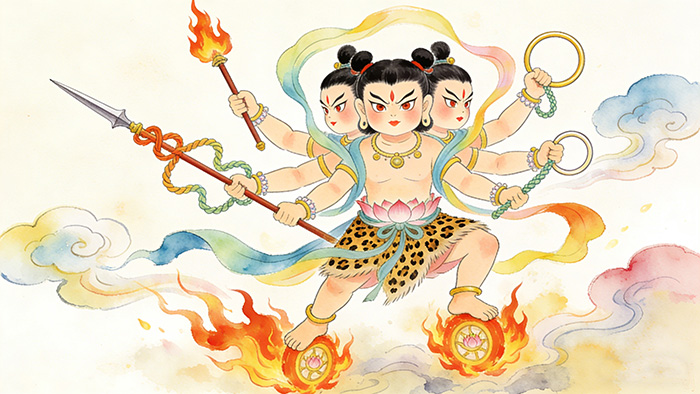
Nezha:
Nezha is a young male god in Chinese mythology. He appears in the Ming-dynasty novels Investiture of the Gods and Journey to the West.
He is the third son of Li Jing, and is therefore known as “Third Prince.”
At birth, he emerged as a flesh ball; after his father split it open, a child jumped out holding magical weapons.
He became a disciple of the immortal Taiyi Zhenren and wields four divine weapons:
the Qiankun Ring, the Red Armillary Sash, the Fire-tipped Spear, and the Wind-Fire Wheels.
Because he killed the son of the Dragon King, he committed suicide to atone for his crime; his master rebuilt his body using lotus flowers and lotus roots, bringing him back to life.
Later, he helped the Zhou dynasty overthrow King Zhou of Shang, earned great merit, and became an official god.
AI-generated artwork by GAMEAY, © 2026.
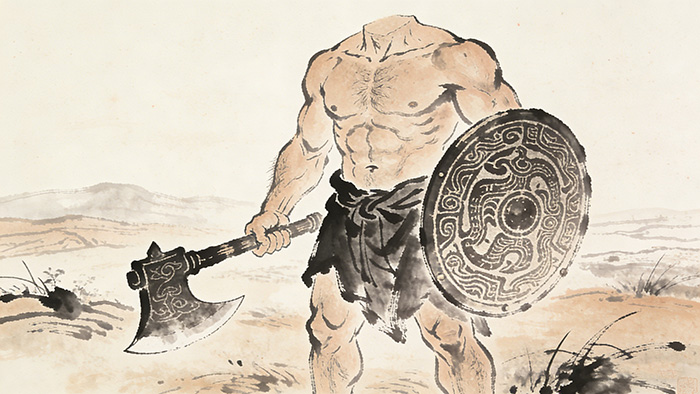
Xingtian:
Xingtian is a warrior from ancient Chinese mythology.
He fought the Heavenly Emperor for the title of god, but was defeated and beheaded; his head was buried on Mount Changyang.
Yet Xingtian did not die. He used his nipples as eyes and his navel as a mouth, and stood up again.
He holds a shield in his left hand and swings an axe with his right, continuing to fight.
This story comes from the Classic of Mountains and Seas (Shan Hai Jing), symbolizing an indomitable spirit that never surrenders.
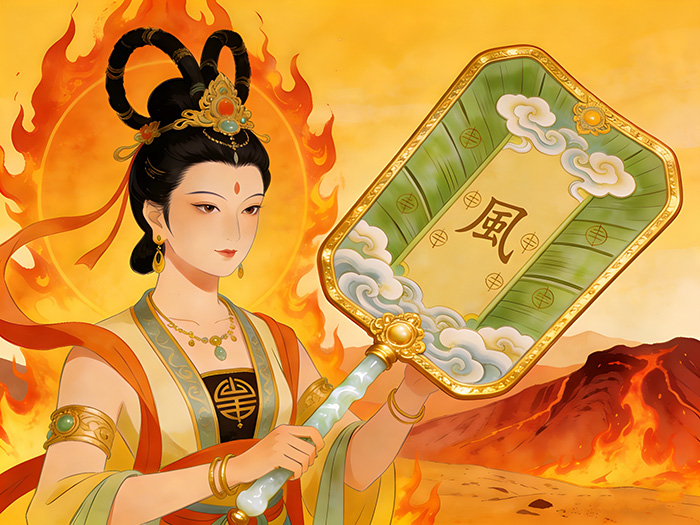
AI-generated artwork by GAMEAY, © 2026.
The Wind-controlling Fan:
The fan used by the protagonist in the trailer is based on the Banana Leaf Fan from the Chinese classic novel Journey to the West.
This fan, originally belonging to Princess Iron Fan, can extinguish the raging fires of Flame Mountain and summon mighty gales,just one wave can blow a person 90,000 li away.
Note: The following content about the game is based on official trailers, publicly available materials, and my own interpretation. Final details are subject to the official game lore.
Game Character Setting and Story:
In this game, the creator goddess Nüwa is known as Feng Li Xi.
The player assumes the role of Ling Zhu Zi,the divine essence of Nezha before his incarnation as a human.
It should be noted that this is an original adaptation created specifically for the game. In traditional mythological texts (such as Fengshen Yanyi and Journey to the West), Nüwa and Nezha never interacted, as they belong to entirely different eras.
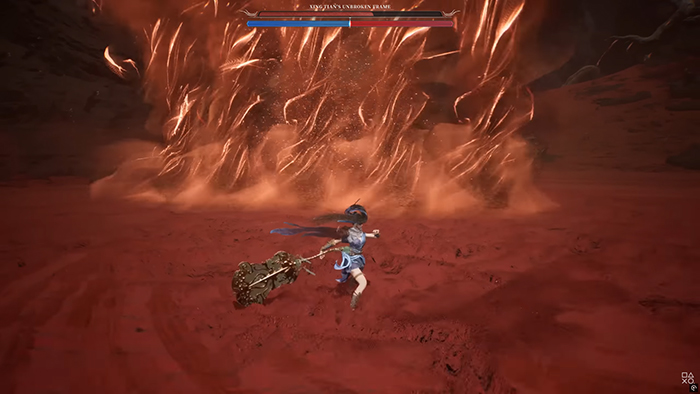
According to the game’s lore, Feng Li Xi modeled Ling Zhu Zi after her own image, making her the first “person” she ever created.
She shaped Ling Zhu Zi’s bones from yellow earth, transformed clear water into her blood, and ignited her soul with sacred fire.
Moreover, Feng Li Xi gave Ling Zhu Zi her own heart,the Heart of Ling Zhu,granting her innate power over water.
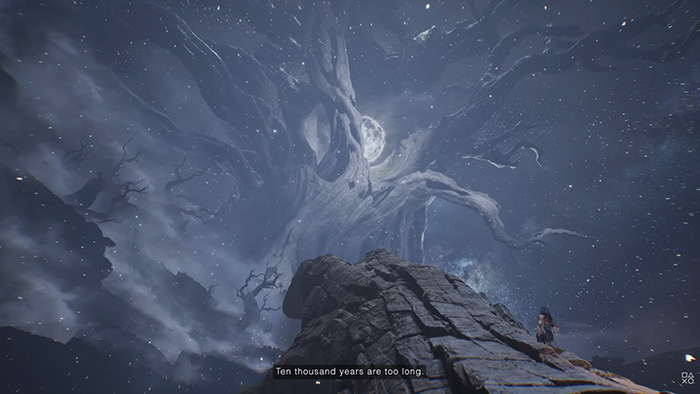
Carrying the Heart of Ling Zhu, Ling Zhu Zi embarks on a journey through the primordial world.
She walks upon the colossal remains of ancient gods,climbing the gigantic body of Kua Fu, ascending the Fusang Divine Tree to reach the heavens.
Along the way, she confronts deities as vast as mountains.
At first, Ling Zhu Zi was merely a faint glimmer in a chaotic age.
Her mission is not only to “mend the heavens,” but more profoundly, to transform herself from a “vessel” (a tool created by another) into a true “person” (a being with her own will).
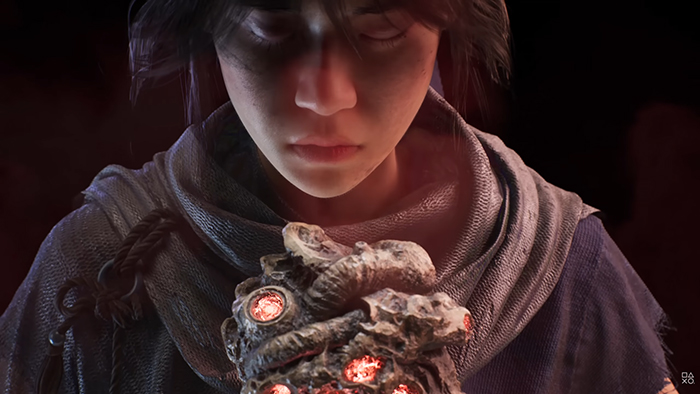
In this narrative, Feng Li Xi is not portrayed as an oppressor, but as a maternal deity willing to sacrifice her own heart.
The story does not center on rebellion; instead, it focuses on Ling Zhu Zi’s choices and her path toward creation.
“Mending the heavens” remains her core objective,but this act is also a journey of awakening, exploring identity, freedom, and growth.
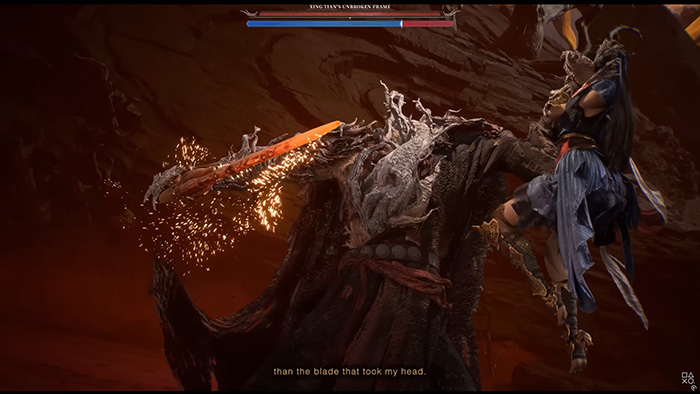
The headless boss she battles is clearly inspired by the mythological figure Xingtian, unmistakable by his iconic shield and weapon.
Gameplay:
Based on dialogue in the trailer, it’s still unclear whether this is a “Souls-like” game—requiring players to repeatedly challenge bosses to grow stronger—or a narrative-driven experience focused primarily on its main storyline.
The boss design follows current mainstream action-game conventions: flashy movesets, multiple transformation phases, and patterns that demand repeated attempts to master. Notably, beneath the boss health bar is a defense indicator.
This appears to represent a direct “clash” mechanic: blue denotes the player’s defense (Water), while red represents the boss’s defense (Fire). Only after fully breaking the opponent’s defense can the player deal true damage.
So far, no clear player health bar is visible (though the blue bar might serve that purpose?), and there’s no sign of a skill UI or a stamina system—elements commonly found in most action games.
Combat remains highly cinematic: the protagonist can perform multi-hit aerial combos on bosses, accompanied by dynamic camera angles and dramatic perspective shifts for maximum visual impact.
Note: Final details are subject to official game information.
About the Author