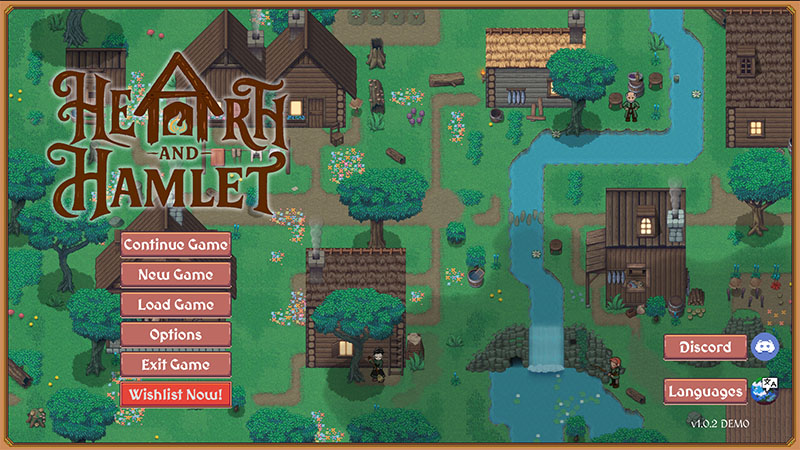
Hearth and Hamlet is a strategy simulation game that seamlessly blends incremental (idle) gameplay with city-building mechanics. Players begin with nothing but a campfire and a few tents, gradually evolving their settlement into a bustling town teeming with magic and vitality through resource gathering, labor allocation, and tech research. The core gameplay loop is intuitive: Gather Resources → Construct Buildings → Unlock Features → Expand Territory.
Used under fair use for commentary and educational purposes.
Resource and Labor Management
In the early game, resource gathering features a basic automation system (such as slow passive wood and food generation), but the efficiency is low. To speed things up, players can manually intervene by clicking resource nodes or—more conveniently—holding down the Spacebar or Left Mouse Button for rapid harvesting.
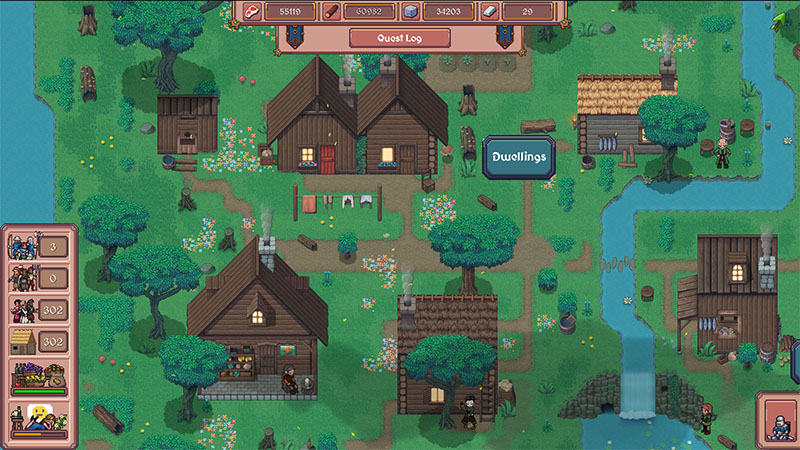
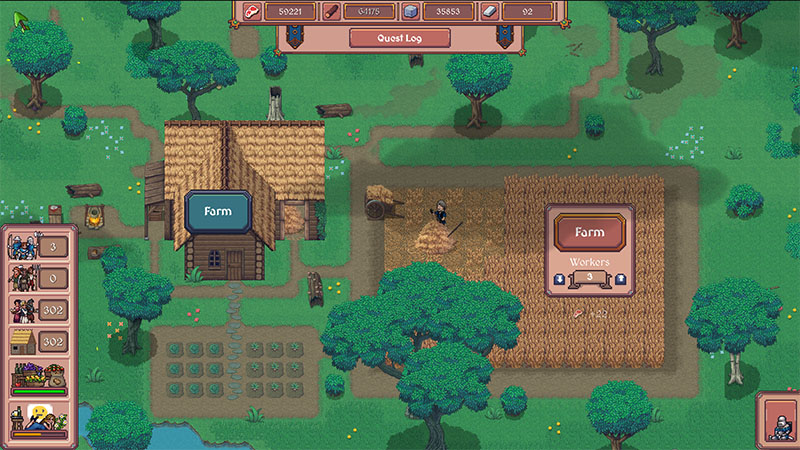
Once you hire your first worker, the production system officially enters the automation phase. From there, the core strategy lies in how you allocate your limited population across various roles like logging, farming, mining, and research. This distribution directly dictates your overall production efficiency and remains the central challenge throughout the game.
Tech Tree and Building Progression
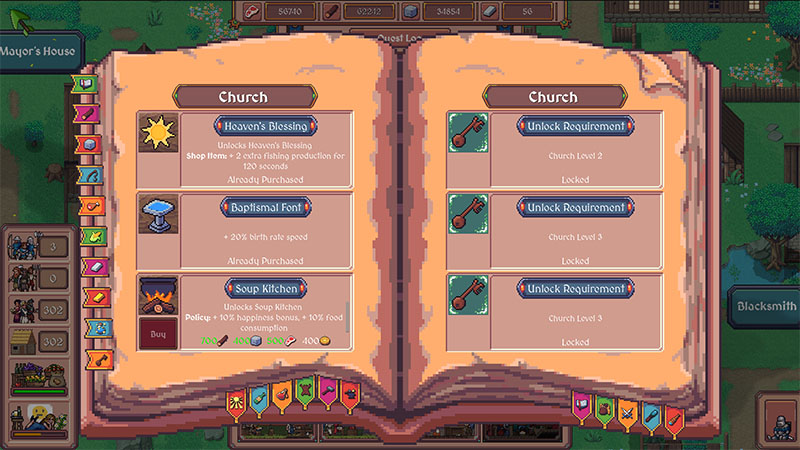
By advancing through the Tech Tree, players can unlock advanced structures such as Churches, Fortifications, Alchemist Labs, and Magic Academies. Each building offers unique functionalities and guides your town’s development path. For instance, the Magic Academy provides powerful spell buffs but requires rare materials, forcing you to carefully weigh the ROI (Return on Investment).
Visual and Audio Experience
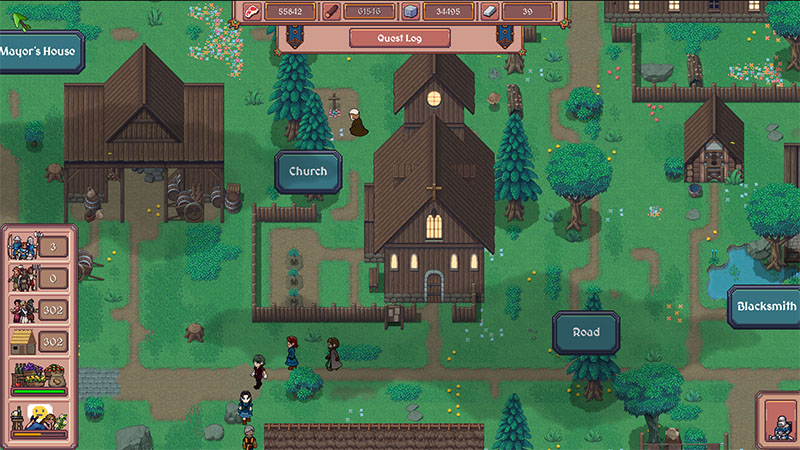
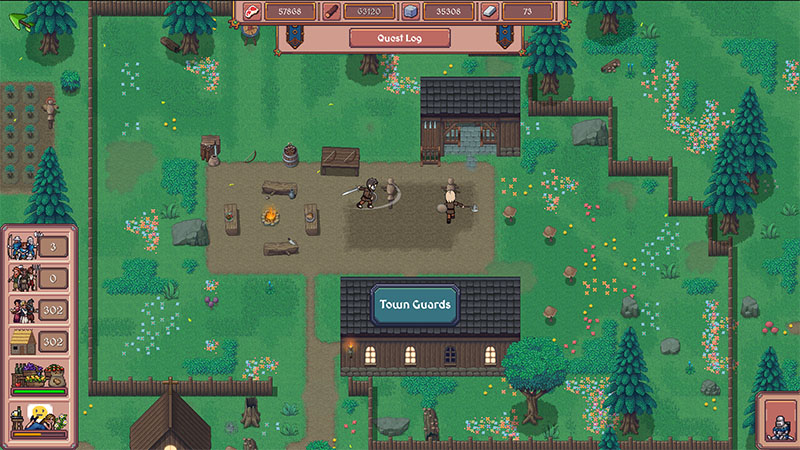
The game utilizes a top-down pixel art style with a soft color palette and rich environmental details. Scenes featuring lakes, marshes, and small boats create a serene, cozy atmosphere. There is a strong sense of progression as your humble shacks eventually evolve into a skyline of soaring towers. The soundtrack is as soothing as a forest whisper, layered with ambient sound effects like chirping birds, flowing water, and the crackle of firewood, making for a truly immersive experience.
Personal Impressions: From Clicking to Strategy
Initially, I mistook this for a simple clicker game. However, once my first house and workshop were built, the depth of the mechanics became clear.
- Automation & Balance: The game quickly transitions from manual clicking to automated production. The key is maintaining the right balance between logging, farming, mining, and research. An imbalance can lead to resource shortages or even famine, even while idling.
- A Living World: Despite the pixel aesthetic, the attention to detail is exquisite. Watching villagers move freely across the map—working and entering their homes—makes the town feel alive. There is a massive sense of accomplishment in watching a tiny campfire grow into a thriving metropolis.
- Combat Pressure: It’s not just about production; you also have to defend what you’ve built. Constructing barracks and training soldiers to repel enemy invasions becomes a vital component of the late-game loop.
The overall pacing is slow, but it is incredibly “evergreen.” Developing from a tiny hamlet to a city with a Magic Academy, ports, and stone walls requires both time and tactical planning. The game doesn’t rush you; it invites you to manage your realm patiently until you’ve built your “Ideal City.” That said, the periodic mid-to-late game raids do add a welcome touch of tension to the experience.
Target Audience
- Casual Players: Perfect for “bite-sized” gaming sessions with low stress.
- Strategy Enthusiasts: Those who enjoy resource management and system optimization.
- Pixel Art Fans: Players who prefer a polished, “comfy” aesthetic.
Final Verdict
Hearth and Hamlet successfully strikes a balance between accessibility and strategic depth. With its beautiful pixel art, relaxing pace, and solid system design, it offers a digital kingdom you can drop into at any time. If you love the cozy vibes of Stardew Valley but crave the civ-planning of Banished, this game is a must-play.
Note: This review is based on the DEMO version; features in the full release may vary.
About the Author